
Quick Facts
- Category
- Nage-Waza
- Subcategory
- Ashi-Waza
- Difficulty
- Intermediate
- Belt Level
- 4th kyu, 3rd kyu
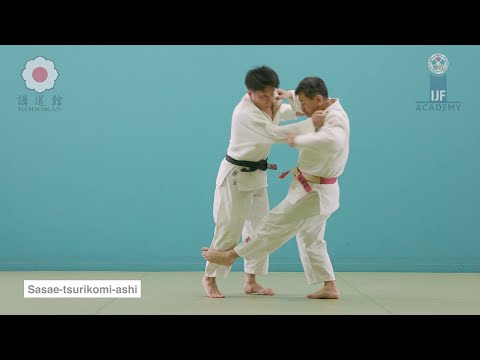
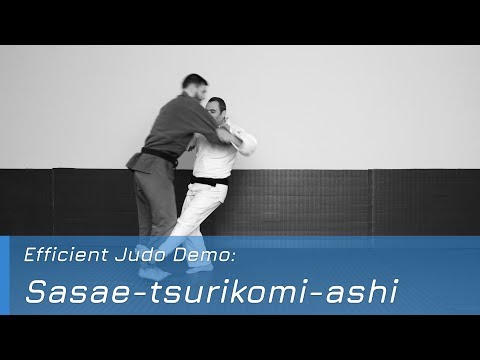
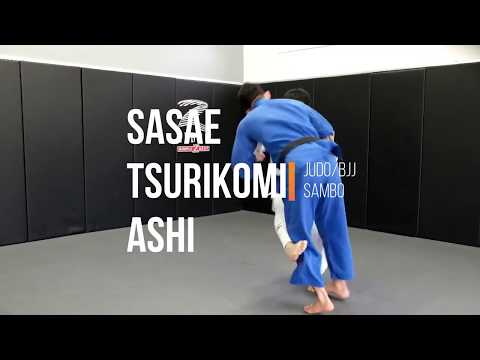
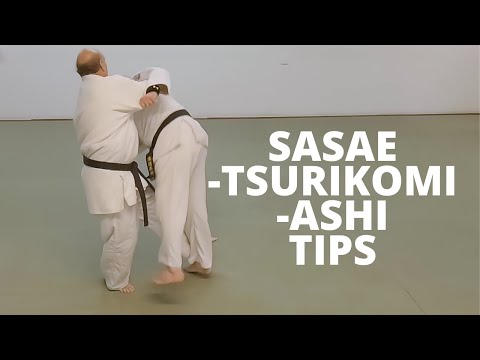
Sasae-Tsurikomi-Ashi is an ankle throw that combines a lifting-pulling (tsuri-komi) hand action with a propping (sasae) foot placement. Tori places the sole of their foot against uke's ankle as a prop while simultaneously pulling uke's upper body forward and upward — uke's forward movement is blocked at the ankle while their upper body continues, projecting them in a forward arc. It is one of the most technically precise ashi-waza.
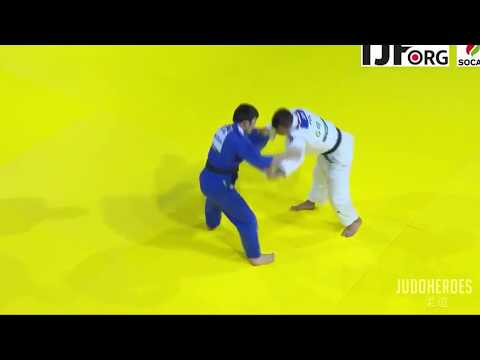
Sasae-Tsurikomi-Ashi — Step by Step
Create forward kuzushi with a strong tsuri-komi pull — collar grip lifts upward while sleeve grip pulls forward. This is identical to the kuzushi of Tsurikomi-Goshi. Uke must be drawn forward with weight shifting to their front foot — the propped ankle is the stepping foot.
As uke steps forward with their right foot, place the sole of your left foot against the inside of uke's right ankle from the front. This is the "sasae" — the prop. The foot placement blocks uke's forward movement at ankle level. Your body pivots slightly to the side to assist the rotational throw.
As the sole of your foot contacts uke's ankle (propping it), simultaneously pull uke's upper body forward and upward with the tsuri-komi grip action. Uke's ankle is blocked and their upper body continues forward — they rotate over the propped ankle and land on the mat in front of tori.
- 1
Apply tsuri-komi kuzushi
Lift the collar grip upward and pull the sleeve forward. Uke is drawn onto their right front corner, stepping forward with their right foot.
- 2
Time the step
Watch for uke's right foot to begin its forward step. The prop must be placed as the foot is in motion, just before it lands.
- 3
Place the sole against uke's ankle
Place the sole of your left foot flat against the inside of uke's right ankle from the front. This is the blocking prop — firm but not a kick.
- 4
Pull with tsuri-komi simultaneously
As the foot contacts uke's ankle, simultaneously execute the full tsuri-komi pull — lift collar up, pull sleeve forward. The two actions must happen together.
- 5
Project uke forward
Uke's ankle is blocked while their upper body continues forward over the prop. They land on the mat in a forward arc.
What Makes It Work
- Timing is everything — the prop must be placed at the exact moment uke's foot is stepping forward. Too early or too late and the technique fails.
- The sole of the foot makes contact, not the ankle or heel. A flat sole contact creates a solid prop; other contact points slip.
- The tsuri-komi pull and the foot prop must be simultaneous. Sequential execution gives uke time to stop their step.
- Sasae-Tsurikomi-Ashi is primarily a foot-blocking throw — the arm action does the throwing, the foot simply blocks the stepping foot.
What to Avoid
Propping too late — uke's foot has already landed
The prop must contact uke's ankle while it is still in the forward step. Once the foot has planted, the block is ineffective.
Using the ankle or toes instead of the sole
Place the full sole of the foot flat against uke's ankle. Using the toe or instep creates an unstable contact that slips under load.
Weak arm pull — no upper body projection force
The arms must create strong tsuri-komi pull simultaneously with the prop. The foot alone does not throw uke — the arms project them over it.
Propping the wrong foot — propping the rear foot
The prop targets uke's stepping (front) foot. Propping the rear or planted foot achieves nothing — the weight is already on the prop foot.
Best Moments to Apply Sasae-Tsurikomi-Ashi
Sasae-Tsurikomi-Ashi is most effective when uke is moving forward and committed to a step. It is an excellent setup technique — get uke moving forward with pushes or feints and time the prop. It is also used as a counter when uke steps forward to attack. The technique works on both sides.
Variations of Sasae-Tsurikomi-Ashi
Combination Sequences
Follow up with