Quick Facts
- Category
- Nage-Waza
- Subcategory
- Ashi-Waza
- Difficulty
- Beginner
- Belt Level
- 6th kyu, 5th kyu
Osoto-Gari is one of the most recognized throws in judo — a powerful outer reap where tori hooks their leg behind uke's leg and drives them backward. It relies on breaking uke's backward balance and sweeping the supporting leg in a scythe-like motion. It is among the most frequently scored techniques in elite judo competition.
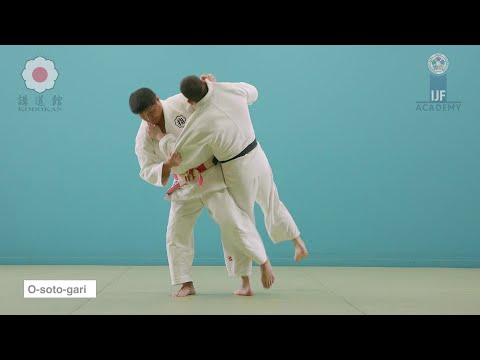
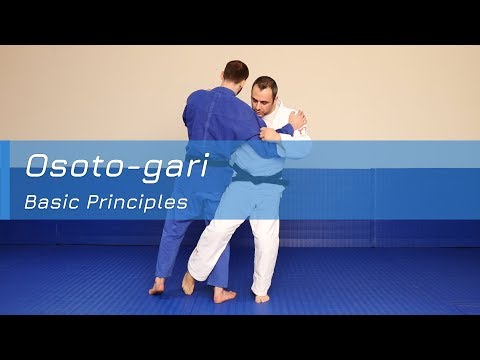
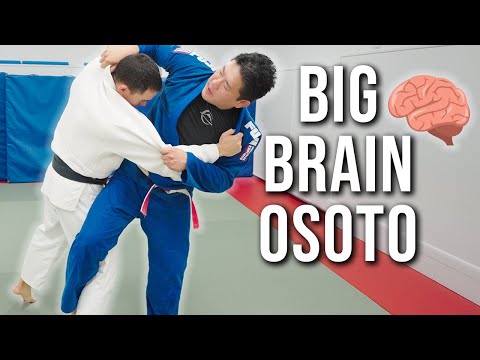

Osoto-Gari — Step by Step
Push uke backward and to their right rear corner. Your lapel hand (left) drives forward into uke's chest at throat level, while your sleeve hand (right) pulls upward. Uke's weight must shift back onto their right heel — this is the critical prerequisite.
Step your left foot to the outside of uke's right foot, planting it firmly. Lean your chest forward into uke to maintain the backward pressure. Your right leg is free to sweep.
Swing your right leg forward (pendulum) and then powerfully back, hooking the back of uke's right thigh with the back of your right thigh. Simultaneously drive your chest forward and down into uke, and pull the sleeve arm upward. The reaping action and the forward body drive together topple uke backward.
- 1
Push uke backward to their right rear corner (kuzushi)
Drive your left lapel hand forward into uke's chest and upward, while pulling their sleeve arm up. Uke must be tipping backward with weight on their right heel before you step in.
- 2
Step your left foot outside uke's right foot
Plant your left foot firmly to the outside of uke's right foot. This is your base. Keep your chest driving forward into uke — do not let them regain upright posture.
- 3
Swing your right leg forward as a pendulum
Swing your right leg forward past uke's right leg. This wind-up phase adds power to the reap. Do not rush it — the pendulum swing is key to the technique's power.
- 4
Reap the back of uke's thigh
Drive your right leg backward in a powerful sweeping arc, contacting the back of uke's right thigh with the back of your right thigh. Your contact point is the thigh, not the ankle or calf.
- 5
Drive forward with your upper body
As your leg reaps, drive your upper body forward and downward into uke. Pull their sleeve arm upward. The backward reap and forward upper body drive work together to topple them.
What Makes It Work
- Uke must be leaning backward before the reap. Attempting Osoto-Gari against an upright or forward-leaning uke results in a blocked, easily countered technique.
- Thigh-to-thigh contact is the reaping point. Contacting at the calf or ankle reduces the sweep and gives uke a chance to hop over.
- The pendulum swing of the right leg adds power — do not try to step directly into the reap.
- Body drive forward is as important as the leg reap. Both elements together create the toppling effect.
What to Avoid
Attacking without backward kuzushi
Push uke backward first. If they are standing upright, they can simply step back and escape. The technique only works when uke's weight is already moving backward.
Contacting at the calf instead of the thigh
Drive your reaping leg higher to make thigh contact. Low contact allows uke to lift their leg and hop over the reap.
Leaning backward instead of forward during kake
Drive your chest forward and down into uke while reaping. Leaning back negates the backward toppling force.
No pendulum swing — stepping directly into the reap
Swing the leg forward first, then back. The pendulum motion generates significantly more reaping force than a direct backward leg drive.
Best Moments to Apply Osoto-Gari
Osoto-Gari is highly effective when uke pushes into you or has stiff, upright posture. It is one of the best counter-attack throws — when uke attacks and misses, their recovery step backward creates the backward kuzushi window Osoto-Gari needs. Time the attack as they step back to regain balance. Works well in combination with O-Uchi-Gari: attack one direction, then the other.
Counters to Osoto-Gari
Combination Sequences
Follow up with