Quick Facts
- Category
- Nage-Waza
- Subcategory
- Ashi-Waza
- Difficulty
- Intermediate
- Belt Level
- 3rd kyu, 2nd kyu
O-Guruma is a large wheel throw where tori sweeps their leg across both of uke's thighs simultaneously — creating a wheel-like fulcrum that throws uke in a large rotational arc. Unlike Harai-Goshi which sweeps one leg, O-Guruma places the leg across both of uke's thighs at hip level, using the double contact as a powerful lever.
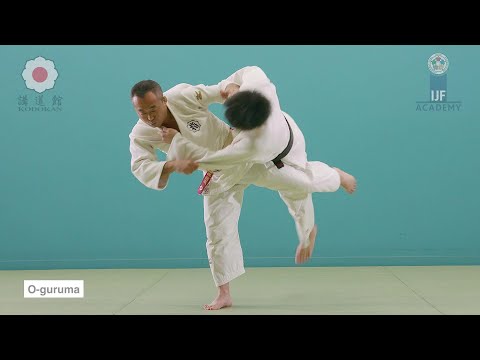
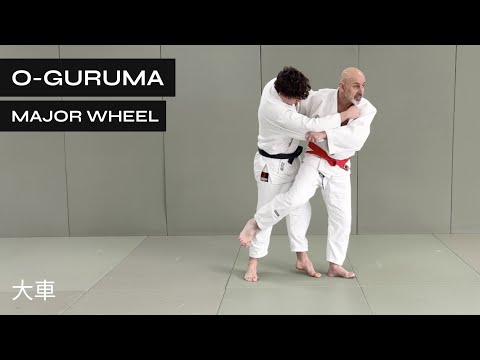
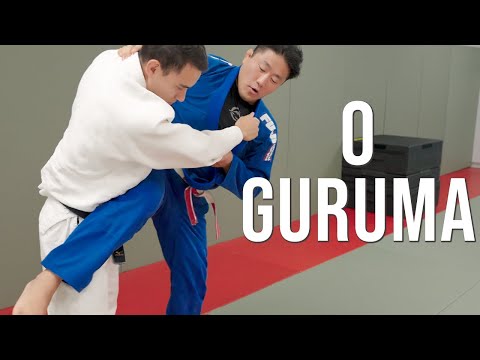
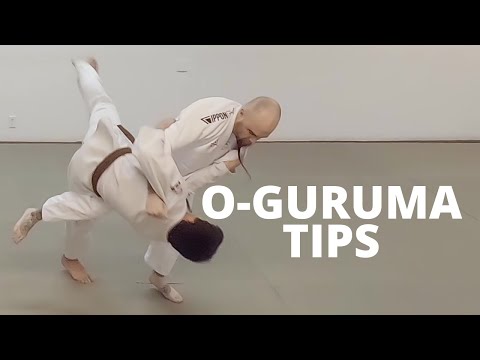
O-Guruma — Step by Step
Pull uke strongly forward and upward onto their right front corner. The sleeve grip elevates and pulls uke's arm forward; the lapel grip pulls their chest forward. Strong forward kuzushi is essential because O-Guruma requires uke to be fully committed forward before the leg is placed as the wheel.
Step your right foot in between or just outside uke's feet and pivot, similar to a hip throw entry. As you pivot, your back faces uke's chest. Bend the standing leg to lower your hips. Your right leg is then extended backward and placed across both of uke's upper thighs — the leg rests across uke like a horizontal bar.
Your extended right leg acts as the wheel axle across uke's thighs. Pull both arms forward and downward in a large arc. Simultaneously rotate your upper body forward. Uke's legs are blocked by your leg while their upper body continues forward — they rotate over the leg-wheel in a large arc and land on the mat.
- 1
Create strong forward kuzushi
Pull uke's sleeve arm up and forward. Lapel hand drives uke's chest forward. Uke must be fully loaded forward with weight on their toes.
- 2
Step in and pivot
Step your right foot in between uke's feet and pivot to face the same direction as uke. Keep your knees bent.
- 3
Place the right leg as the wheel
Extend your right leg backward and place it across both of uke's upper thighs. Your leg contacts uke across both legs simultaneously at hip height.
- 4
Pull arms in a forward arc
Pull both arms forward and downward in a large circular arc — sleeve arm pulling uke's arm forward and down, lapel arm pulling the chest.
- 5
Complete the rotational throw
Uke's legs are blocked by your extended leg while their upper body rotates forward over it. They land in a large arc on the mat in front of you.
What Makes It Work
- The leg placement is the defining feature — it must contact both thighs simultaneously at a consistent height. Placement on only one thigh becomes Harai-Goshi.
- The throw is rotational, not a forward dump. The arm pull should describe a large arc — uke wheels over the leg.
- Strong forward kuzushi before the leg is placed is essential. The leg acts as a stationary wheel only if uke is already committed forward.
- Keep the standing leg slightly bent during kake to maintain balance as uke's weight loads onto your extended leg.
What to Avoid
Placing the leg on only one of uke's thighs
Both thighs must be contacted simultaneously. Single-thigh contact is Harai-Goshi mechanics, not O-Guruma. Ensure the leg sweeps fully across both legs.
Placing the leg too low (across the knees)
The leg should contact across the upper thighs, not at knee height. Knee-level placement reduces leverage and can injure uke's knee joint.
Insufficient kuzushi before placing the leg
If uke is not loaded forward when the leg is placed, they simply push backward against your leg. Establish full forward kuzushi first.
Short, downward arm pull instead of a large arc
The arm pull must be a large forward arc to create the rotation. A short downward pull just bends uke without wheeling them over.
Best Moments to Apply O-Guruma
O-Guruma is effective against opponents who have a wide stance or who advance with both feet simultaneously, making the double-thigh leg placement accessible. It is used when tori wants the leverage of a double-thigh wheel rather than a single-leg sweep. In competition it can be used against opponents who defend hip throws by spreading their legs.