Quick Facts
- Category
- Nage-Waza
- Subcategory
- Ashi-Waza
- Difficulty
- Beginner
- Belt Level
- 5th kyu, 4th kyu
Ko-Uchi-Gari is a minor inner reap that hooks uke's heel from the inside, typically targeting a single foot as they step or shift weight. It is one of the most versatile setup techniques in judo — used either as a scoring throw or more commonly to disrupt balance and create openings for major techniques like Seoi-Nage, Tai-Otoshi, or Harai-Goshi.
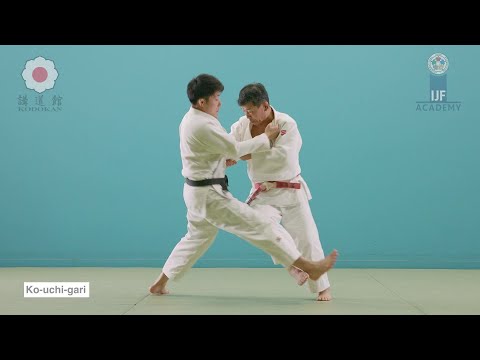

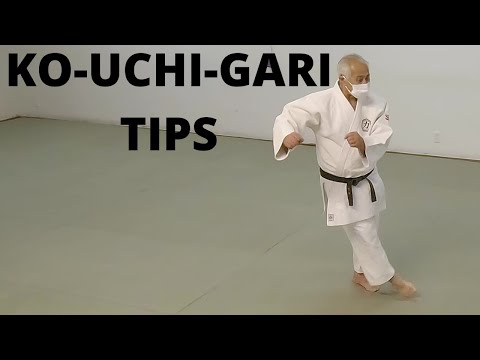
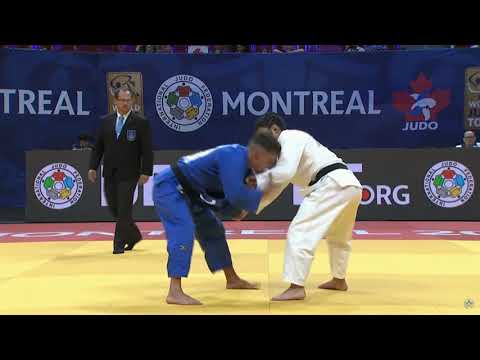
Ko-Uchi-Gari — Step by Step
Ko-Uchi-Gari works both with backward kuzushi (push uke backward onto the targeted foot) and by timing the attack as uke steps forward, catching the heel as weight transfers onto it.
Step your left foot to the inside-left of uke's stance, positioning yourself to attack uke's right heel from the inside. Keep your body compact — do not step between their feet.
Hook your right foot around the inside of uke's right heel in a scooping motion, pulling their heel upward and inward toward uke's centerline. Simultaneously use your grips to push uke backward over the destabilized foot. The action is a quick, sharp hook — not a long sweep.
- 1
Time the attack or create backward kuzushi
Either push uke backward so their weight is on their right heel, or time the attack as they step forward with their right foot (catching it mid-weight-transfer).
- 2
Step your left foot in
Plant your left foot between uke's legs or beside their right foot. Keep your body compact — do not overreach.
- 3
Hook uke's heel with your right foot
Hook the inside of uke's right heel with your right foot in a scooping motion. Pull the heel upward and inward toward uke's centerline — the action is compact and sharp, not a big sweep.
- 4
Push with your grips
Drive uke backward over the destabilized foot using your lapel and sleeve grips. The leg hook and upper body push work together.
- 5
Follow up or transition
If Ko-Uchi-Gari scores, follow uke to the ground into ne-waza. If uke defends and you only disrupt their balance, immediately transition to Seoi-Nage, Tai-Otoshi, or another major technique.
What Makes It Work
- Ko-Uchi-Gari is often more valuable as a disruption tool than a finishing throw — use it to break posture and create openings.
- Timing the attack as uke steps forward is often more effective than fighting for kuzushi from a static position.
- The reap targets the heel, not the calf. The hook is at the ankle/heel level — small and precise.
- Combine freely: Ko-Uchi-Gari → Seoi-Nage is one of the most common combination sequences in competition judo.
What to Avoid
Overreaching and losing your own balance
Keep the technique compact. Ko-Uchi-Gari is a small technique — do not lunge for it.
Targeting the calf or mid-leg instead of the heel
The hook is at heel level. Contact higher up the leg is easily blocked by uke simply bending their knee.
Using it as a standalone throw when uke is stable
Against a stable, braced uke, Ko-Uchi-Gari will not score. Use it when uke is stepping or already off-balance.
Not following up after a failed attack
Even when Ko-Uchi-Gari fails, uke's defensive reaction shifts their weight in a predictable direction. Always have a combination ready.
Best Moments to Apply Ko-Uchi-Gari
Ko-Uchi-Gari is most effective as part of a combination: the first attack sets up the second. Attack Ko-Uchi-Gari — if uke pushes their foot downward and into the ground to resist the lift, their weight shifts forward — immediately switch to Seoi-Nage. If they pull their foot away, the space opens for O-Uchi-Gari on the other leg or a Tai-Otoshi entry. It is also effective as a solo throw when catching uke mid-step.