Quick Facts
- Category
- Nage-Waza
- Subcategory
- Ashi-Waza
- Difficulty
- Intermediate
- Belt Level
- 4th kyu, 3rd kyu
Ko-Uchi-Gake is a small inner hooking throw that targets the inside of uke's lower leg. Like Ko-Soto-Gake, it hooks and holds rather than reaping. Tori hooks the inside of uke's lower leg with their own leg, trapping it, while pushing or driving uke's upper body backward or to the side. It is related to Ko-Uchi-Gari but uses the gake (hook) principle rather than the gari (reap) principle.
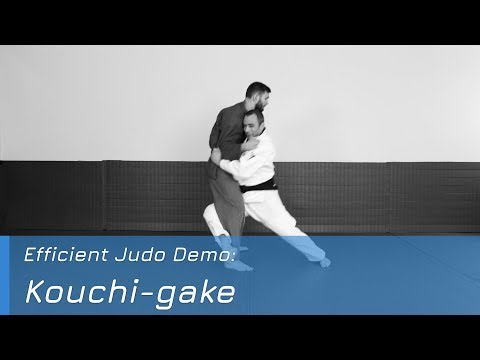
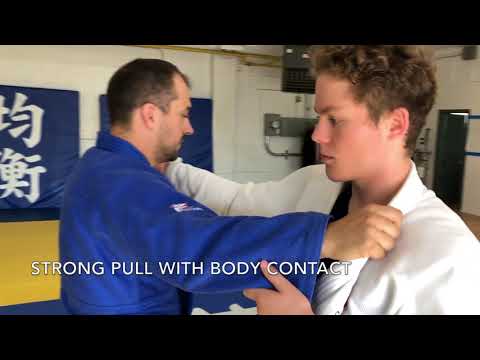
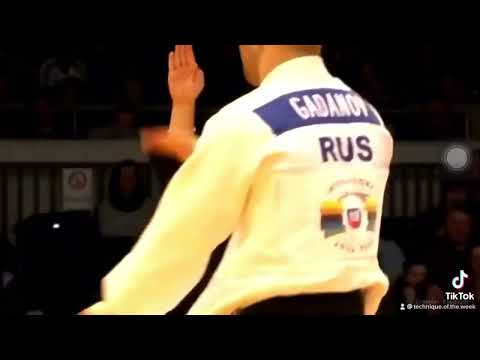
Ko-Uchi-Gake — Step by Step
Push or drive uke backward onto their rear heel, or pull uke to one side to shift their weight onto one foot. The inner hook works best when uke's weight is on the leg being hooked. A combination of pushing the upper body and stepping to create a side-on position helps establish the kuzushi direction.
Step in with one foot and position your hooking leg to attack the inside of uke's lower leg. The hook wraps around the inside of uke's calf or above the ankle from the inner side. Your body faces uke or is at a slight angle. The hooking leg contacts uke's leg from the inner side, not a sweep but a catch.
Maintain the inner hook while driving uke's upper body in the opposite direction — typically backward or to the outside. The hook traps the inner leg while the upper body is pushed over it. Uke's base is destroyed from the inside as their upper body goes over the trapped leg.
- 1
Load uke's weight onto the target leg
Through gripping and pushing, shift uke's weight onto the leg you will hook. The hook is most effective when that leg bears weight.
- 2
Step in close
Step your foot in beside uke's foot to position your hooking leg. You need to be close enough that your leg can contact the inside of uke's lower leg.
- 3
Hook from the inside
Hook your leg around the inside of uke's lower leg — the back of your knee hooks against uke's calf from the inner side.
- 4
Hold the hook firmly
Unlike a reap, maintain the hook contact. Your leg is holding uke's leg trapped, not sweeping it.
- 5
Drive uke's upper body over the hook
Push uke's upper body backward or to the outside simultaneously. Uke tips over the trapped inner leg and falls to the mat.
What Makes It Work
- Ko-Uchi-Gake hooks and holds the inside of uke's lower leg — it does not sweep through like Ko-Uchi-Gari.
- The direction of the upper body push matters — pushing backward tips uke backward; pushing to the outside tips them sideways. Match the push direction to the kuzushi.
- Close body positioning is essential. The inner hook requires proximity — too far away and the leg reach is insufficient.
- A trapped leg is only half the technique. Strong upper body control is the other half.
What to Avoid
Sweeping through instead of hooking and holding
Ko-Uchi-Gake requires maintaining the hook contact. If the leg sweeps through and releases, it becomes Ko-Uchi-Gari mechanics.
Hooking too high — above the knee
The hook targets the lower leg, below the knee. Hooking above the knee applies torque to the knee joint and may injure uke.
No upper body control during the hook
The hook alone cannot throw uke. Drive the upper body simultaneously to complete the technique.
Standing too far from uke
Move in close before hooking. The inner hook requires body proximity.
Best Moments to Apply Ko-Uchi-Gake
Ko-Uchi-Gake works best when uke is in a square stance with weight evenly distributed or slightly backward. It complements Ko-Uchi-Gari — when uke has begun to defend the reap by pulling the foot back, shift to the hook. Use it in combination sequences when you need to attack the inside of uke's base.
Combination Sequences
Attack these first
Follow up with