
Quick Facts
- Category
- Nage-Waza
- Subcategory
- Ashi-Waza
- Difficulty
- Beginner
- Belt Level
- 5th kyu, 4th kyu
Ko-Soto-Gari is a minor outer reap that hooks the outside of uke's heel with a quick, compact scooping action. Smaller and more subtle than Osoto-Gari, it targets the heel rather than the full leg, making it useful as a feint, a transition, or a combination trigger. It is particularly effective when uke's weight is on their heels.
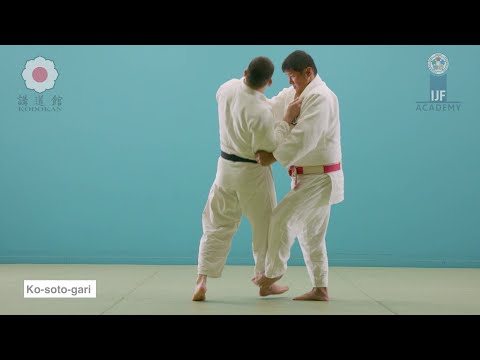
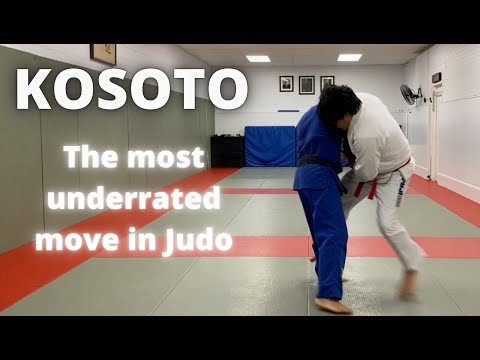
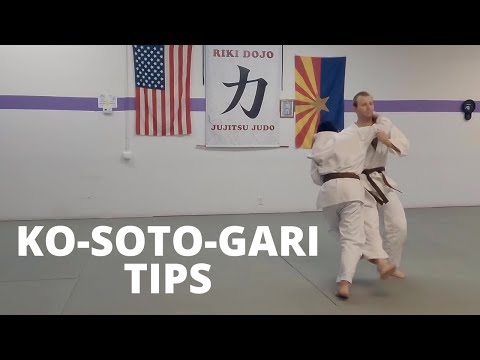
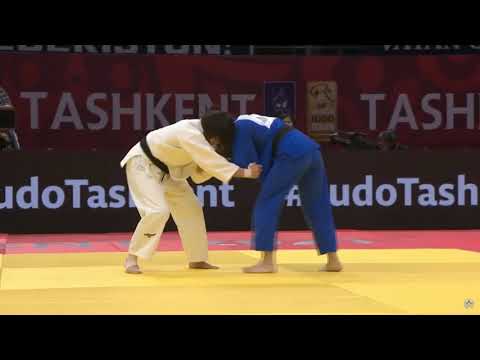
Ko-Soto-Gari — Step by Step
Push uke backward and toward their right rear corner. Your lapel hand drives diagonally into uke's chest toward their right shoulder, loading weight specifically onto the right heel. The heel must be bearing weight for the reap to work.
Step to the outside of uke's right foot with your left foot. Position yourself at uke's side. Your right foot is free to hook.
Hook behind uke's right heel with your right foot, making contact at the Achilles tendon/heel area from the outside. The scooping motion pulls the heel inward and upward. Simultaneously drive your upper body forward into uke. The combined heel scoop and push topples uke backward.
- 1
Load uke's weight onto their right heel
Push uke backward with your lapel hand. Their right heel must be bearing weight — this is the prerequisite for an effective reap.
- 2
Step to the outside with your left foot
Step your left foot to the outside of uke's right foot. You are now positioned slightly to uke's right side.
- 3
Hook the outside of uke's heel
Hook behind uke's right heel with your right foot, contacting the Achilles tendon/heel from the outside. Use a scooping motion to pull it inward and upward.
- 4
Drive forward and down
Push uke backward with your chest and grips as you scoop the heel. The push and scoop together topple uke backward.
What Makes It Work
- This is a minor technique — small, quick, and precise. Do not try to force it with power.
- The reap is at the heel level. Contact higher up the leg is blocked by uke bending their knee.
- Ko-Soto-Gari pairs well with O-Uchi-Gari: attack inside-out repeatedly to disrupt uke's balance.
- Works best on a static or heel-weighted uke — catches them flatfooted.
What to Avoid
Trying to reap a foot that is not bearing weight
Create backward kuzushi first. A floating foot cannot be reaped effectively.
Contact too high (at the ankle or calf)
Target the heel specifically. Higher contact can be blocked.
Using too much force for a minor technique
Ko-Soto-Gari is subtle. It relies on precision and timing, not power.
Best Moments to Apply Ko-Soto-Gari
Ko-Soto-Gari is most useful as a transitional technique — attacking one side then the other — or when catching uke standing still with weight on their heels. Also effective after O-Uchi-Gari if uke defends by stepping back with their right leg: their weight shifts to the heel, creating a Ko-Soto-Gari opportunity.