
Quick Facts
- Category
- Nage-Waza
- Subcategory
- Yoko-Sutemi-Waza
- Difficulty
- Intermediate
- Belt Level
- 3rd kyu, 2nd kyu
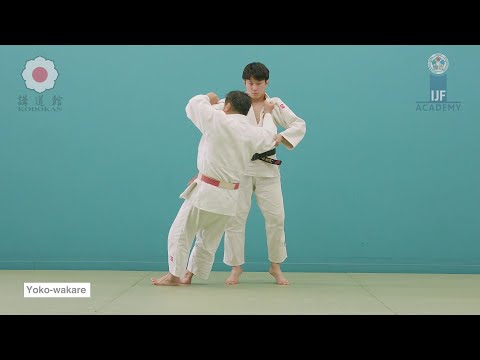
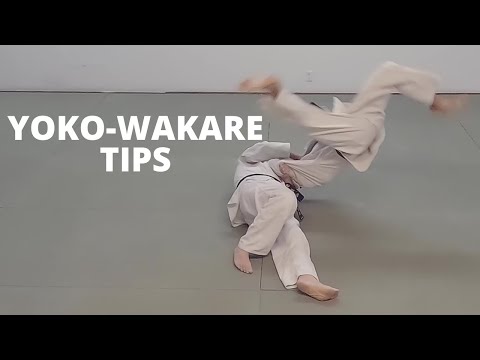
Yoko-Wakare is a side sacrifice throw where tori falls to the side perpendicular to uke, using the fall and arm pull to sweep uke over and separate (wakare) from them as uke is thrown. It is one of the classical side sacrifice throws appearing in the Nage-no-Kata and illustrates the principle of using body weight and momentum from a side fall to achieve a throw.

Yoko-Wakare — Step by Step
Pull uke strongly to the side — in the direction tori will fall. The sleeve and lapel grips pull uke's upper body toward tori's falling side. Uke's balance is broken sideways onto their front corner in the direction of the sacrifice.
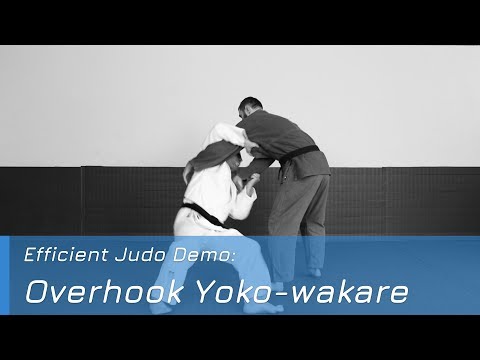
Step across in front of uke and position your body perpendicular to uke's direction. As you begin to fall to the side, your body slides across uke's path. The sleeve grip maintains contact to guide uke's arm as you fall.
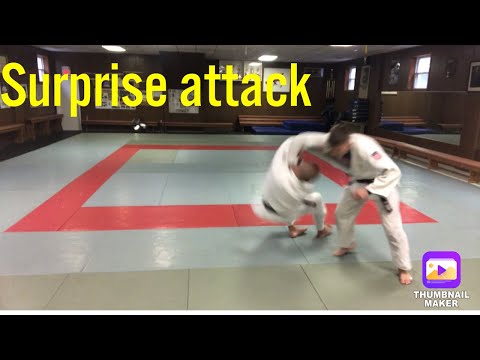
Fall directly to the side — the sacrifice. As you fall, pull uke's upper body over and in the direction of your fall using the grips. Your falling body weight and the arm pull together sweep uke over and separate you both — uke lands on the mat while tori is on their side.
- 1
Create sideward kuzushi
Pull uke toward your intended falling side with both grips. Uke's balance shifts sideways.
- 2
Step across uke's path
Step or swing your body across uke's front, perpendicular to them.
- 3
Fall to the side — the sacrifice
Fall directly to the side, committing fully. The fall must be decisive and take you fully to the ground.
- 4
Pull uke with both grips
As you fall, pull uke's upper body with the grips, directing them over and in the same direction as your fall.
- 5
Separate from uke as they land
Uke is thrown over and to the mat. The "wakare" (separation) occurs as your bodies separate at the landing — tori rolls clear.
What Makes It Work
- The fall must be complete and committed. A half-hearted fall leaves you partially upright and the throw incomplete.
- The grips pull uke in the same direction as tori's fall. Both forces work together.
- Yoko-Wakare is a classical technique — focus on clean execution and the principle of side sacrifice.
- The "separation" (wakare) is built into the technique — tori and uke separate cleanly as the throw is completed.
What to Avoid
Falling too far behind uke — no directional leverage
Position your body perpendicular to uke before falling. The side fall must sweep across uke's path, not behind them.
Not committing fully to the fall
Yoko-Wakare requires total sacrifice. A partial fall results in a tangled position, not a clean throw.
Losing grip during the fall
Maintain grips throughout the fall. The grips direct uke's trajectory and prevent them from simply stepping over tori.
Insufficient kuzushi before falling
Pull uke off balance before sacrificing. Falling when uke is upright and balanced means they simply step over you.
Best Moments to Apply Yoko-Wakare
Yoko-Wakare is most practical when uke is moving to the side or when the position of uke relative to tori makes a side sacrifice more accessible than a forward throw. It is a Nage-no-Kata technique and is regularly practiced in kata training.
Combination Sequences
Attack these first
Follow up with