Quick Facts
- Category
- Nage-Waza
- Subcategory
- Yoko-Sutemi-Waza
- Difficulty
- Intermediate
- Belt Level
- 3rd kyu, 2nd kyu, 1st kyu
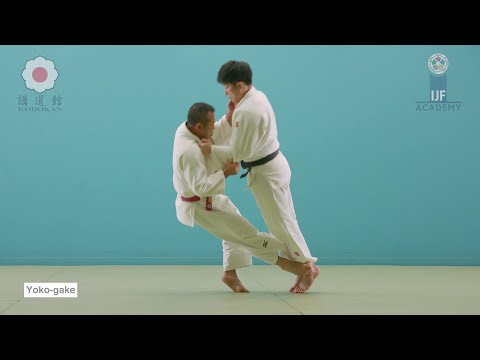
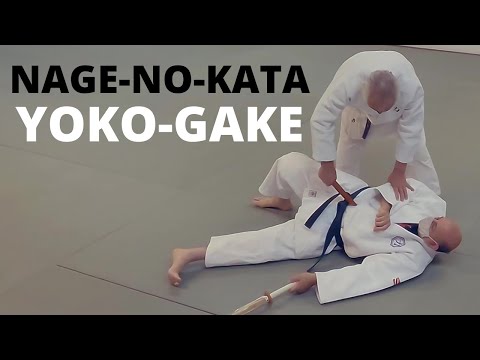
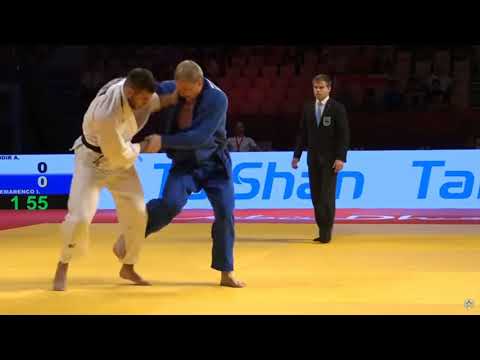
Yoko-Gake is a side sacrifice throw in which tori steps across uke's front, hooks their foot against uke's near ankle, and falls to the side to sweep uke's foot and drop them laterally. Unlike rear sacrifice throws where tori falls backward, in Yoko-Gake tori falls directly to the side. The foot hook and side fall combine to take both tori and uke down together, with uke landing on the mat beside or slightly ahead of tori. It is a versatile technique that can be applied from various angles.


Yoko-Gake — Step by Step
Pull uke's sleeve arm sharply to your right and slightly downward, breaking their balance to their right front corner. The lapel arm lifts and draws uke's upper body forward and to your right. Uke's weight shifts onto their right foot in preparation for their right foot to be hooked.
Step your left foot to the outside of uke's right foot, crossing in front of uke. As you step, begin your sideward falling motion to the right. Hook your right foot against the outside of uke's right ankle — the hooking action places your right foot on the mat and sweeps uke's ankle inward.
Fall to your right side while simultaneously hooking uke's right ankle with your right foot in a lateral sweeping motion. Pull the sleeve arm sharply downward and to your right as you fall. The side fall with the ankle hook takes uke's right foot out from under them and uke falls laterally to land on the mat beside you.
- 1
Break balance to uke's right front
Pull the sleeve arm forward and to the right while the lapel arm draws uke's upper body toward you. Shift uke's weight onto their right foot.
- 2
Step across uke's front
Step your left foot to the outside of and in front of uke's right foot. You are now crossing in front of uke's body.
- 3
Hook the ankle
Hook your right foot against the outside of uke's right ankle. The hook is low and lateral — your foot sweeps uke's ankle inward.
- 4
Initiate the side fall
Commit to falling directly to your right side — not backward, not forward, directly sideward. Keep your body connected to uke.
- 5
Complete with sleeve pull
As you fall, pull the sleeve arm sharply downward and to your right, directing uke's fall laterally. Uke lands on the mat beside you.
What Makes It Work
- The fall must be directly to the side — a backward lean converts this to a poor sacrifice throw that puts tori in danger.
- The ankle hook must be low and contact the outside of uke's ankle, not the shin or calf.
- The sleeve arm pull is essential — without it, uke simply steps over your falling body.
- The hook must be applied as uke's weight is shifting onto the right foot but before it is fully loaded — a fully planted, heavily weighted foot resists the lateral sweep.
What to Avoid
Falling backward instead of directly to the side
Yoko-Gake is a side sacrifice, not rear. Falling backward removes the ankle hook from uke's foot path and destroys the direction of the throw.
Hooking too high on the shin instead of the ankle
The hook should contact uke's ankle. A shin hook has less leverage and is easier for uke to step over.
Losing grip contact during the fall
Maintain firm grips on sleeve and lapel throughout the fall and throw. Releasing during the sacrifice leaves uke free to step over you.
Attempting on an opponent moving toward you
Yoko-Gake works best when uke is stationary or moving to the side. Against an opponent advancing directly toward you, the step-across is difficult to time.
Best Moments to Apply Yoko-Gake
Yoko-Gake is effective against a stationary or laterally moving opponent. It works well from a circular movement pattern where uke's weight is momentarily on one foot. It is often used as a counter when uke resists a lateral pull, and as a complement to harai-goshi or de-ashi-barai combinations where lateral footwork is established.