Quick Facts
- Category
- Nage-Waza
- Subcategory
- Koshi-Waza
- Difficulty
- Beginner
- Belt Level
- 6th kyu, 5th kyu
Uki-Goshi is one of the original techniques of the Kodokan and is closely related to O-Goshi — the key difference being that tori wraps around uke's waist and uses the hip as a floating point of contact rather than a fixed fulcrum. Jigoro Kano described Uki-Goshi as the technique from which he developed judo, having used it to throw a larger opponent. It teaches the floating, light quality of koshi-waza.
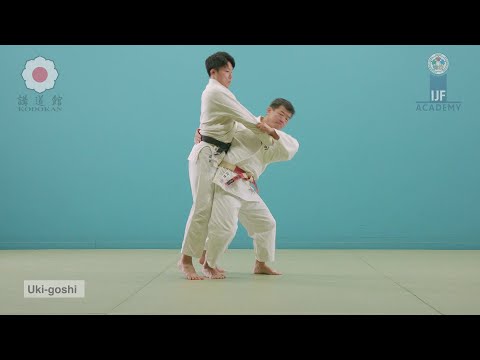
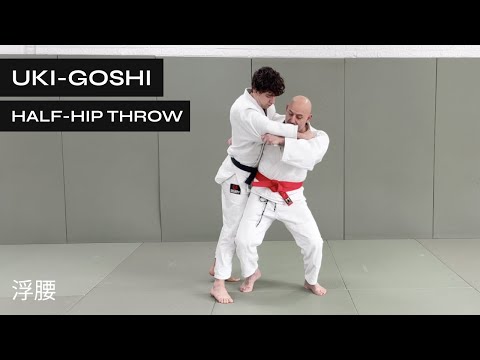
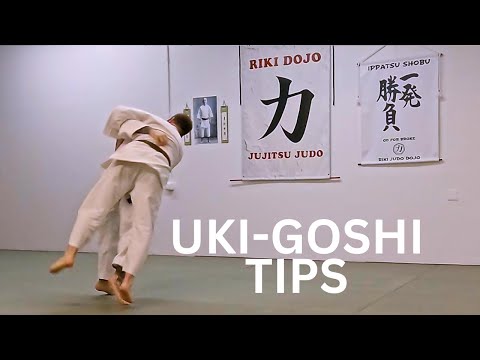
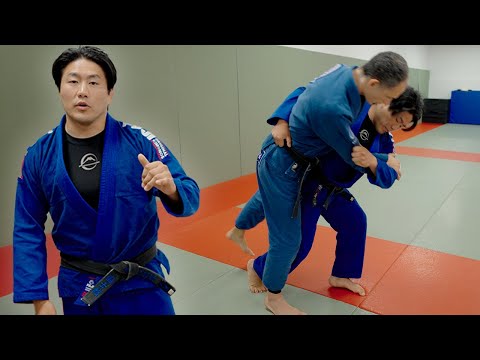
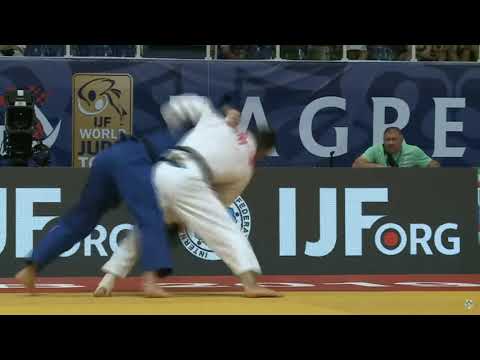
Uki-Goshi — Step by Step
Pull uke forward and onto their right front corner with the sleeve grip while the right arm wraps around uke's waist or hip area. The forward pull with the sleeve arm is the primary kuzushi action — uke is drawn onto their toes and their weight shifts forward. The feeling should be of uke floating forward.
Step your right foot in front of uke's right foot and pivot to place your back against uke's chest. Unlike O-Goshi, the hip in Uki-Goshi does not make hard contact — it floats just in front of uke's hip without pressing firmly in. The right arm wraps around uke's waist with a light, guiding hold.
Rotate your upper body forward, pulling uke over your right hip with the sleeve arm. The waist arm guides rather than lifts. The floating hip acts as a pivot point. Bend forward at the waist to project uke. Because the contact is light, the throw has a more fluid, circular quality compared to O-Goshi.
- 1
Pull uke forward with the sleeve grip
Pull uke's right sleeve arm upward and forward, creating forward kuzushi. Uke rises onto their toes.
- 2
Step in and pivot
Step your right foot in front of uke's right foot. Pivot on it to bring your left foot around so your back faces uke. Wrap your right arm around uke's waist.
- 3
Position the hip lightly — floating contact
Your right hip should be just in front of uke's hip — light contact, not a hard press. This is the "floating" quality of Uki-Goshi.
- 4
Rotate and pull with both arms
Rotate your upper body forward. Pull the sleeve arm forward and down. The waist arm guides uke's body around and forward.
- 5
Project uke forward
Bend forward at the waist as you rotate, projecting uke forward and around your hip to land on the mat.
What Makes It Work
- The "floating" quality distinguishes Uki-Goshi from O-Goshi — the hip contact is light and transitional, not a hard wedging fulcrum.
- The sleeve arm does most of the work — it pulls uke forward and guides their arc. The waist arm is a guide, not a lift.
- Uki-Goshi teaches the circular, flowing quality of judo that Kano emphasized. The throw should feel effortless when timed correctly.
- This technique is one of the original Kodokan 40 techniques and appears in Nage-no-Kata.
What to Avoid
Making hard hip contact — turning it into O-Goshi
The hip should float lightly in front of uke. If you press hard, you are using O-Goshi mechanics. Keep the contact light and let the rotation do the work.
Insufficient forward kuzushi
Without uke being pulled forward, the hip has nothing to float against. The sleeve grip must pull uke forward strongly before the entry.
Stopping the rotation at the hip
Continue rotating and bending forward through the throw. Stopping rotation after hip contact leaves uke upright on your back.
Waist arm pulling uke down instead of guiding
The waist arm guides uke's forward arc — it does not yank downward. Think of it as shaping uke's movement, not forcing it.
Best Moments to Apply Uki-Goshi
Uki-Goshi is most effective against opponents with upright posture and moderate height. Its value as a teaching technique is high — it develops the intuition for hip throws and the feeling of making uke "float" before the throw. In competition it is often a foundation for transitioning to more powerful hip throws like Harai-Goshi.