Quick Facts
- Category
- Katame-Waza
- Subcategory
- Kansetsu-Waza
- Difficulty
- Intermediate
- Belt Level
- 3rd kyu, 2nd kyu
Ude-Garami attacks a bent arm using a figure-four grip to rotate the shoulder joint. Known as the "Kimura lock" in BJJ and MMA (named after Masahiko Kimura, who used it to defeat Hélio Gracie in 1951), it applies torque to the shoulder by rotating the forearm in a direction the joint cannot follow. It can be applied from mount, side control, guard, or as a counter to Seoi-Nage entry.
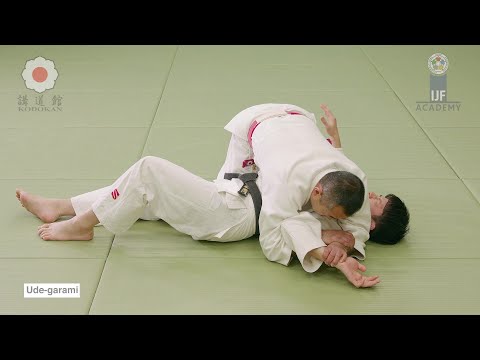
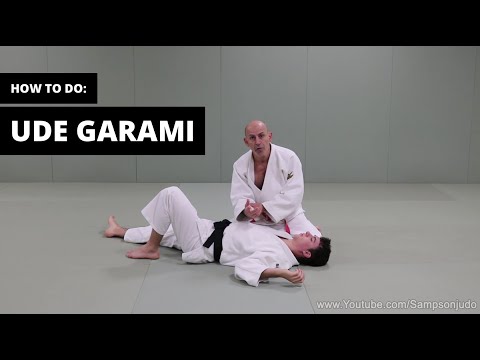
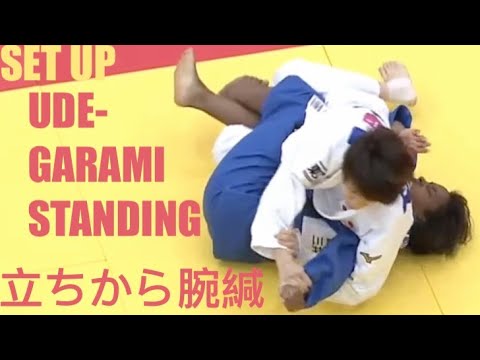
Ude-Garami — Step by Step
- 1
Isolate uke's arm in a bent position
Control uke's right arm bent at approximately 90 degrees, with their elbow on the mat and forearm pointing upward. Their hand should be beside their head, palm facing down.
- 2
Grip uke's right wrist with your left hand
Your left hand grips uke's right wrist from on top, securing the bent arm.
- 3
Thread your right arm under uke's right upper arm
Reach your right arm under uke's right upper arm/tricep area and grip your own left wrist to form the figure-four. This is the control grip.
- 4
Apply the shoulder rotation
Rotate uke's forearm upward (toward their head) while simultaneously pulling their upper arm inward with your right arm. The figure-four creates a lever that rotates the shoulder joint.
- 5
Maintain posture and increase pressure progressively
Drive uke's hand toward their head and beyond while maintaining the figure-four. Increase pressure incrementally and release immediately on uke's tap.
What Makes It Work
- The figure-four grip is the core of the technique — without it, rotation is limited.
- The forearm rotates upward toward uke's head — the direction that stresses the shoulder.
- Keep uke's elbow close to their body. If the elbow flares out, the shoulder angle changes unfavorably.
- This technique can be applied from multiple positions — mount, side control, North-South, even standing as a counter to Seoi-Nage entry.
What to Avoid
Figure-four grip too shallow
Thread your arm deeply under uke's upper arm to get the figure-four wrist-to-wrist. Shallow grip means less control.
Rotating the forearm toward the feet (wrong direction)
Rotate toward the head — driving uke's hand toward their shoulder and beyond. Downward rotation is away from the stress angle.
Elbow allowed to flare outward
Keep uke's elbow pinned close to their side. Use your body weight to hold it in place.
Applying suddenly without warning
Apply progressively. Ude-Garami can cause serious shoulder injury if torque is applied rapidly.
Best Moments to Apply Ude-Garami
Ude-Garami is effective whenever uke's arm is bent and you control their upper body. Classic setup: from side control, pin uke's near arm, thread the figure-four, apply. Also a powerful counter to Seoi-Nage — when tori enters for the throw and exposes their bent arm, uke can apply Ude-Garami around tori's shoulder. In BJJ/MMA it is known as the Kimura and is commonly used from the guard; note that guard-based ne-waza is restricted in IJF competition judo.