
Quick Facts
- Category
- Nage-Waza
- Subcategory
- Te-Waza
- Difficulty
- Advanced
- Belt Level
- 1st kyu, 1st dan
Uchi-Mata-Sukashi is an advanced counter-technique specifically designed to neutralize and reverse Uchi-Mata. When uke attempts Uchi-Mata, tori steps over the sweeping leg (avoiding it), shifts their weight to the other side, and uses the momentum of uke's failed attack to throw them. It is one of judo's most sophisticated counters and requires an intimate understanding of Uchi-Mata mechanics.
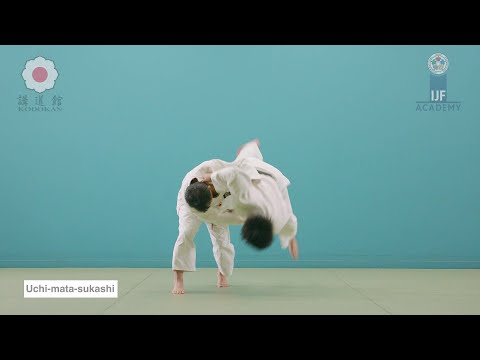
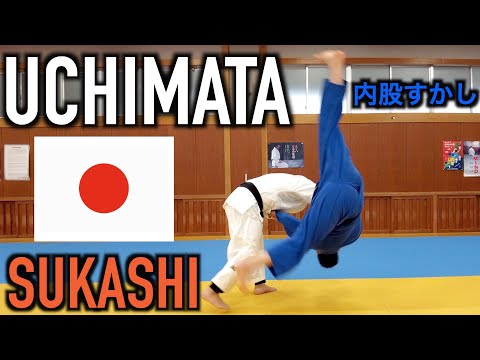


Uchi-Mata-Sukashi — Step by Step
Kuzushi is provided by uke's own failed Uchi-Mata attempt. When uke commits to sweeping tori's inner thigh and tori voids the sweep by stepping over or lifting their leg, uke's sweeping leg misses and they are briefly off-balance. Tori exploits this moment of imbalance to project uke using their own committed force.
As uke enters for Uchi-Mata, tori lifts the threatened leg slightly or steps it aside to allow uke's sweep to pass through the void. Simultaneously, tori maintains hand grips and shifts their weight to the opposite side. The position at this moment sets up the reversal — tori must be close, grips secure, and weight balanced.
Once uke's sweeping leg passes through without contact (the "sukashi" — void), tori pulls with the sleeve and lapel grips to accelerate uke's rotation in the direction they were already moving. Tori may also drive with the hip or use a leg block to assist. Uke, committed and off-balance, continues in their rotation and falls.
- 1
Recognize uke's Uchi-Mata entry
Read uke's body language as they step in, pivot, and initiate the inner thigh sweep. This requires experience reading Uchi-Mata setups.
- 2
Void the sweep
Lift the threatened leg or step it to the outside just as uke's sweeping leg rises. The sweep passes through empty space — the "sukashi."
- 3
Maintain grips and shift weight
Keep both grips active throughout. Shift your weight toward uke's committed side — the side they were sweeping toward.
- 4
Pull and guide uke's rotation
Pull the sleeve and lapel grips to accelerate uke's forward-and-over rotation. They are already committed and falling; you are guiding that fall.
- 5
Project uke to the mat
Uke completes the rotation they started with Uchi-Mata — but without tori's body as a target, they fall past and onto the mat.
What Makes It Work
- Uchi-Mata-Sukashi is classified as te-waza because the counter relies entirely on hand mechanics — the void itself and the guiding pull.
- The timing of the void is precise — too early and uke pulls back, too late and the sweep connects. The void must coincide with uke's committed leg drive.
- Maintaining strong grips throughout is essential. Losing grip during the void loses control of the counter-throw direction.
- This technique requires genuine mastery of Uchi-Mata mechanics — you cannot effectively counter what you do not understand.
What to Avoid
Stepping away from uke instead of voiding in place
The void is created by lifting the leg or shifting the hip, not by retreating. Retreating breaks grip contact and loses the counter opportunity.
Voiding too early — uke adjusts and continues
Time the void to coincide with uke's full commitment of the sweeping leg. If you void too early, uke can redirect or pull back.
Losing grip during the transition
Keep both grips active throughout. The grips guide the direction of uke's fall and provide the pulling force for the counter-throw.
Attempting Uchi-Mata-Sukashi as a primary attack
This is a counter technique. It requires uke to attack first. Attempting it as a primary technique against a non-attacking uke makes no mechanical sense.
Best Moments to Apply Uchi-Mata-Sukashi
Uchi-Mata-Sukashi is used specifically as a counter to Uchi-Mata. It is most practical at higher competitive levels where Uchi-Mata is common in an opponent's repertoire. Develop it in combination drills: partner attacks with Uchi-Mata, you practice the counter. It requires repetition to develop the timing reflex.