Quick Facts
- Category
- Katame-Waza
- Subcategory
- Osaekomi-Waza
- Difficulty
- Intermediate
- Belt Level
- 4th kyu, 3rd kyu, 2nd kyu
Tate-Shiho-Gatame is a mount position hold in which tori straddles uke face-to-face, with their legs straddling uke's torso and their arms controlling uke's head and upper body. The "vertical four-corner hold" describes how tori's body occupies the vertical axis above uke, with limbs controlling the four corners. It is the most dominant pin in judo ground work — once established, it is extremely difficult to escape and provides direct access to choke and armlock attacks.
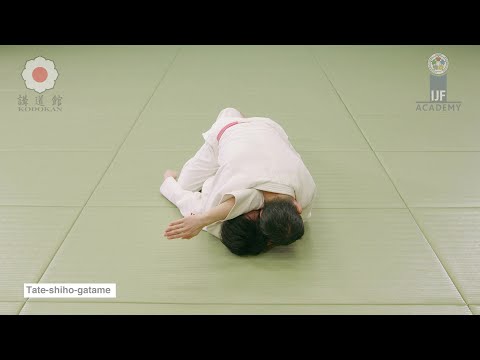
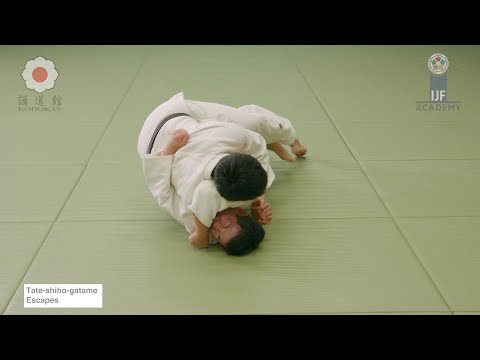
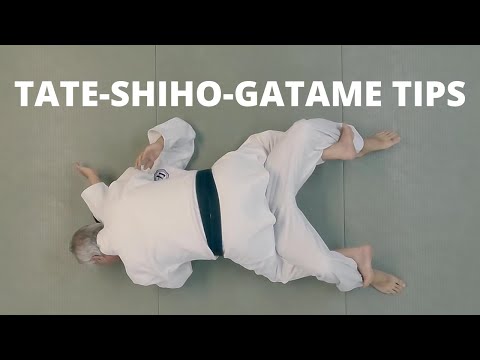
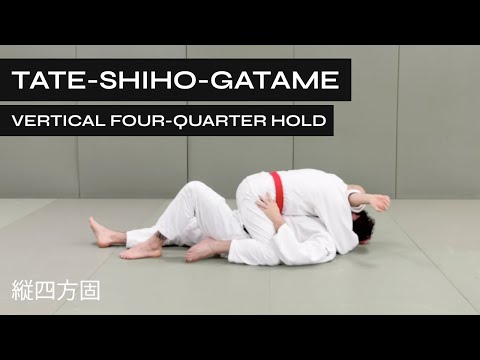
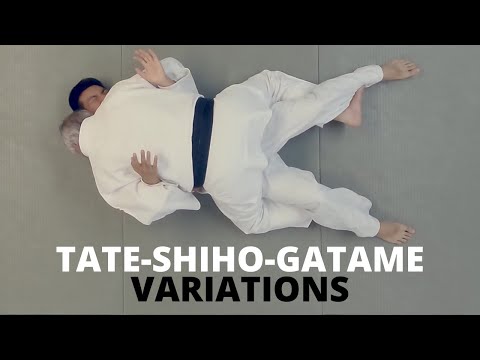
Tate-Shiho-Gatame — Step by Step
From a mounted position, keep your hips low and centred on uke's torso. Control uke's head by hooking under the neck with one arm and gripping the collar with the other. Uke's escape options are severely limited when the head is controlled and the hips are low.
Straddle uke's torso with your knees on the mat beside their hips. Tuck your feet under uke's thighs (hooks) or cross your feet at uke's lower back. Slide one arm under uke's neck from one side and grip the collar on the far side. The other arm controls uke's near arm or grips the lapel.
Sink your hips low onto uke's torso. Drive your chest toward uke's face, keeping your head low. The weight distribution over uke's centre of mass makes the pin extremely difficult to dislodge. Hooks under uke's thighs prevent the bridge-and-roll escape.
- 1
Establish mount position
Straddle uke's torso with knees on the mat at their hip level. Your hips sit directly above uke's lower abdomen.
- 2
Hook the feet under uke's thighs
Tuck your feet under uke's thighs (grapevine hooks) or cross your ankles at uke's lower back. Hooks prevent bridging escape.
- 3
Control uke's head and neck
Slide your right arm under uke's neck and grip uke's collar on the left side. This controls uke's head rotation.
- 4
Control uke's near arm
With your left arm, control uke's right arm — grip their sleeve, trap their elbow, or control their wrist. Prevent arm-based escapes.
- 5
Sink hips and apply weight
Lower your hips as much as possible onto uke's torso. Drive your chest forward and keep your head low beside uke's head. Maintain for 10 seconds for waza-ari, 20 seconds for ippon.
What Makes It Work
- Low hips are the foundation — the lower your hips, the harder the pin is to escape. Raised hips invite the bridge-and-roll.
- Head control prevents uke from turning into or away from you to create escape leverage.
- Hooks under uke's thighs (or crossed feet) neutralise the bridge escape, which is uke's primary tool from this position.
- Chest pressure toward uke's face keeps uke's upper back flat on the mat.
What to Avoid
Hips too high (kneeling tall)
Sit your hips down as low as possible onto uke's abdomen. High hips create space that allows uke to bridge and roll.
No hooks on uke's thighs
Without hooks, uke can bridge and roll. Tuck your feet under uke's thighs or apply another hooking control.
Leaning too far forward (over uke's head)
Leaning past uke's head shifts your weight off their chest and allows them to work free underneath you. Stay centred.
Arms supporting weight instead of controlling uke
Arms should control uke's head and arm, not prop you up. If you need your arms for balance, your hips are too high.
Best Moments to Apply Tate-Shiho-Gatame
Tate-Shiho-Gatame is the natural landing position after many front-throw combinations, and is an excellent transition from side holds when uke attempts to roll. It is the most advantageous position in ground work because it offers direct access to chokes (applying from the mount) and armlocks (Juji-Gatame from mount) while maintaining the pin.