Quick Facts
- Category
- Nage-Waza
- Subcategory
- Te-Waza
- Difficulty
- Intermediate
- Belt Level
- 4th kyu, 3rd kyu, 2nd kyu
Sumi-Otoshi is a hand technique in which tori drops uke to their rear corner without the use of hip or leg contact. The throw is executed entirely through arm and body control — tori breaks uke's balance to one of their rear corners and then drives their weight backward and downward in that direction. The absence of hip or leg contact makes Sumi-Otoshi unusual among throwing techniques and allows it to be applied from unusual angles and distances.
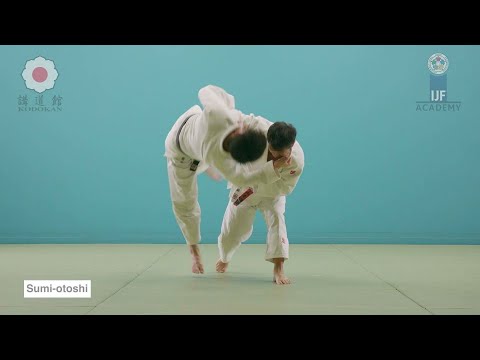
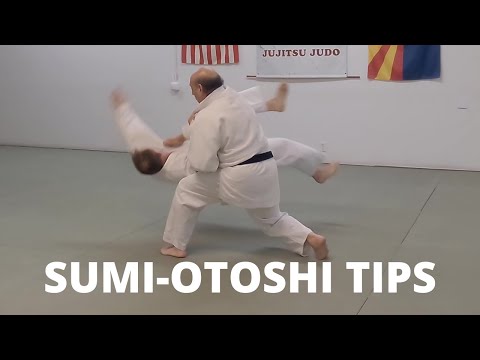
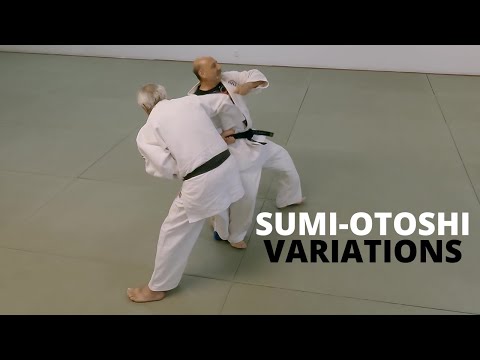
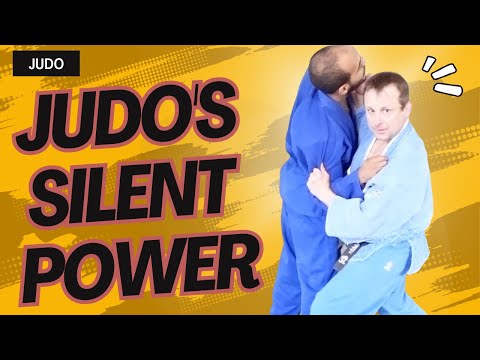
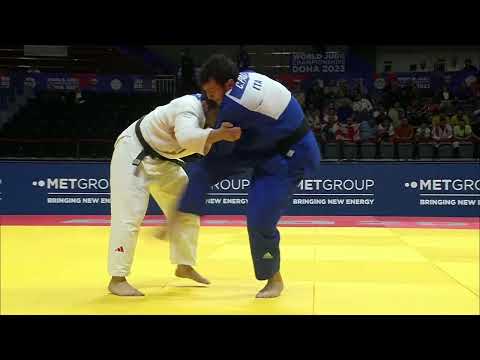
Sumi-Otoshi — Step by Step
Draw uke forward strongly to commit their weight forward. As uke resists by pushing back, or as tori steps diagonally to uke's side, redirect that backward energy toward uke's right rear corner. The kuzushi is to the rear corner — uke's weight shifts to their right heel with no leg to recover onto.
Step diagonally to uke's right side, moving your right foot behind and to the outside of uke's right foot. As you step, use both arms to steer uke's upper body toward their right rear corner. Your body faces uke's side with no hip contact.
Push uke's upper body toward their right rear corner with both arms — the sleeve arm pulls and drives downward and back, the lapel arm steers and pushes. Without a leg or hip to stop their backward fall, uke drops directly to their right rear corner and lands on the mat. Maintain arm tension throughout to direct the fall.
- 1
Draw uke forward to commit their weight
Pull uke forward with both arms, encouraging them to step in and commit their weight toward you.
- 2
Redirect to the rear corner
As uke steps forward, step your right foot to the side and behind uke's right foot. Simultaneously redirect your arm pull from forward to backward and toward uke's right rear corner.
- 3
Position beside uke
Move to uke's right side, facing their shoulder. There is no hip contact — your body is beside uke's.
- 4
Drive uke's upper body backward
Push uke's right shoulder backward and down with the lapel arm, while pulling the sleeve arm across and down. Uke's centre of gravity moves toward their right rear corner.
- 5
Drop uke to the mat
Maintain driving pressure as uke's balance tips past the point of recovery. Uke drops to their right rear, landing on the mat.
What Makes It Work
- There is no hip or leg contact — the entire throw is arm and body steering. This is rare in judo and requires precise directional control.
- The rear corner is the target — uke's right rear (or left rear for a left-side variation). The direction must be precise.
- Effective kuzushi is created by first drawing uke forward, then suddenly redirecting to the rear. The misdirection unbalances uke.
- Speed and commitment are essential — a slow, tentative push allows uke to step back and recover.
What to Avoid
Trying to push uke straight back instead of to the rear corner
Uke can easily step back to recover from a straight backward push. The throw only works toward the rear corner — where there is no foot to step to.
Using hip contact during the throw
Sumi-Otoshi is specifically a hand/arm technique with no hip involvement. Adding hip contact changes it to a different technique.
Failing to first draw uke forward
The misdirection from forward-to-backward is what unbalances uke. Attempting a pure backward push from the start gives uke full resistance from their planted stance.
Loose arm control during the drop
Both arms must maintain firm, directional control throughout. Loose grips reduce the directional precision and uke can adjust.
Best Moments to Apply Sumi-Otoshi
Sumi-Otoshi is most effective when uke is pushing back against tori's forward attack — redirecting their backward resistance toward a rear corner. It is also used from a side-step position when uke overextends an attack. It works as a counter to aggressive forward throws and as a surprise attack from unusual angles.
Combination Sequences
Attack these first