Quick Facts
- Category
- Nage-Waza
- Subcategory
- Te-Waza
- Difficulty
- Intermediate
- Belt Level
- 5th kyu, 4th kyu
Seoi-Nage is one of the most iconic and widely used throws in judo. The thrower (tori) enters beneath the opponent (uke), loads them onto their back, and rotates forward to throw them over the shoulder. It is a cornerstone technique taught early in judo training and remains devastating at the highest levels of competition.
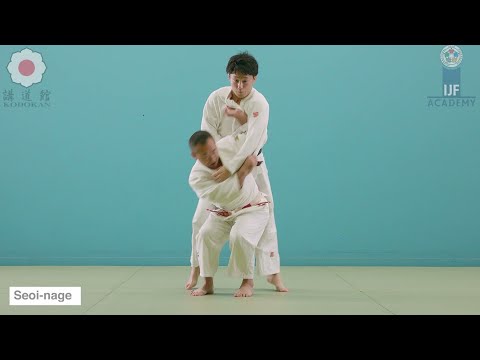
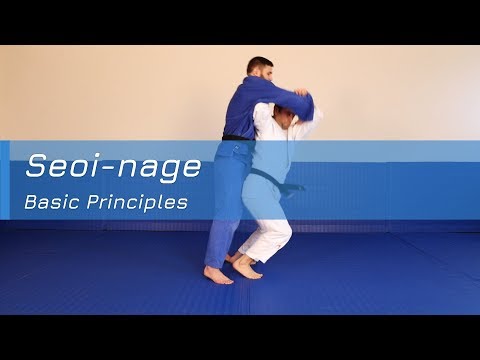
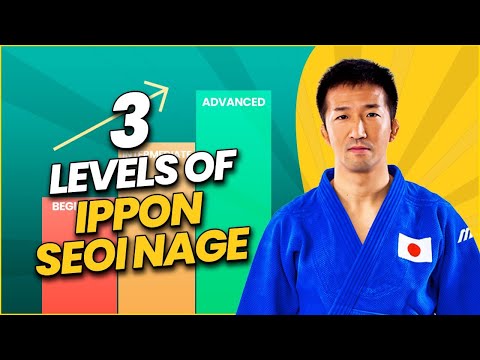

Seoi-Nage — Step by Step
Pull uke sharply forward and upward with your sleeve hand (right hand in right-handed grip), breaking their balance to their right front corner. Simultaneously drive upward with your lapel hand to elevate their posture. The goal is to get uke rising onto their toes.
Step your right foot across in front of uke's right foot, toes pointing in the same direction. Then pivot on your right foot, bringing your left foot in to complete the turn so your back is fully against uke's chest. Bend your knees and lower your hips below uke's hip line.
Straighten your legs explosively to lift uke off the ground, simultaneously driving your right elbow forward and down while bending at the waist. Rotate your entire body over your right hip to complete the throw, projecting uke forward over your shoulder.
- 1
Establish kuzushi — break uke's balance forward
Using your right sleeve grip, pull uke's arm sharply upward and forward toward their right front corner. Your left lapel hand drives upward simultaneously. Uke should be rising onto their toes, leaning forward.
- 2
Step across with your right foot
Step your right foot in front of and across uke's right foot. Your foot should point in the same direction uke is facing. This first step begins rotating your body into the throw.
- 3
Pivot and bring in your left foot
Pivot on your right foot and swing your left foot around so your feet are parallel and your back faces uke's chest. At the moment of entry, your hips must be lower than uke's hips — bend your knees significantly.
- 4
Secure the arm and lower your center of gravity
Pull uke's right arm tightly over your right shoulder. Your right arm drives under their armpit (morote grip) or around the arm (ippon seoi variation). Your back should be flush against uke's chest.
- 5
Execute kake — the throw
Straighten both legs powerfully to load uke's weight onto your back, then bend forward at the waist while driving your throwing arm forward and down. Rotate through your hip to project uke over your right shoulder and onto the mat.
What Makes It Work
- Hips must be lower than uke's hips at the moment of entry — if you are the same height or higher, the throw will not work.
- Kuzushi must precede entry. Attempting tsukuri before breaking balance gives uke time to resist.
- The throw is powered by leg drive, not just arm strength. Straightening the legs is the primary lifting force.
- Keep uke's arm pulled tightly over your shoulder throughout — do not let it slip away during the rotation.
What to Avoid
Hips too high during entry
Bend your knees deeply before stepping in. A common drill is to practice the entry alone until hip height feels natural.
Insufficient kuzushi before stepping in
Pull upward and forward before your first step. If uke has both feet planted flat and their posture is upright, you will be blocked.
Back not fully turned into uke
Your entire back should contact uke's chest. A half-turn leaves a gap that uke can use to create distance and escape.
Bending forward at the waist too early
Straighten your legs first to load uke, then bend forward. Bending before loading means you only throw your upper body, not uke.
Best Moments to Apply Seoi-Nage
Seoi-Nage is most effective when uke is walking or pulling backward (which creates forward momentum you can redirect). It suits practitioners with a lower center of gravity than their opponent — shorter judoka find particular success. It is highly effective in combination as a secondary attack after a failed ashi-waza attempt, or as a follow-up to Ko-Uchi-Gari. Works best in a high, upright grip with sleeve control.