Quick Facts
- Category
- Katame-Waza
- Subcategory
- Shime-Waza
- Difficulty
- Advanced
- Belt Level
- 2nd kyu, 1st kyu, 1st dan
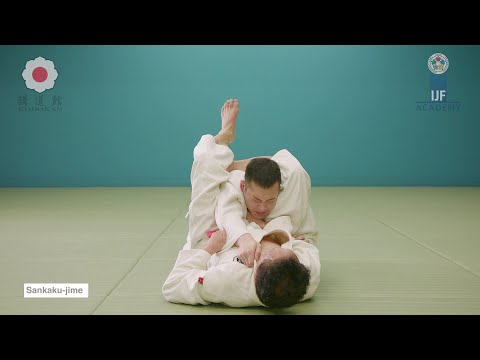
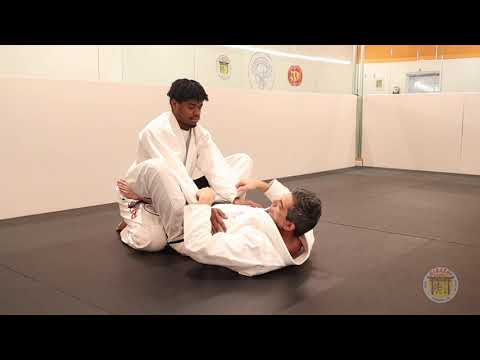
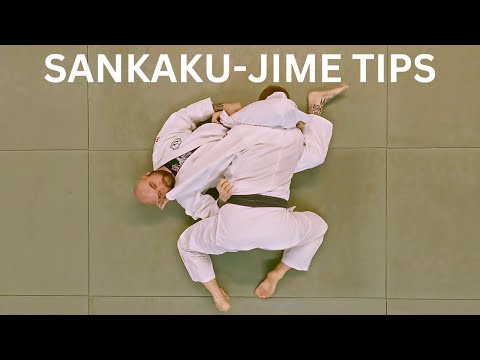
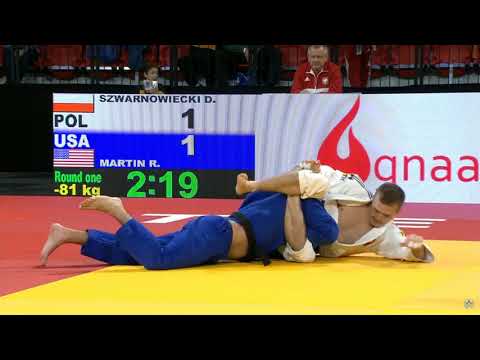
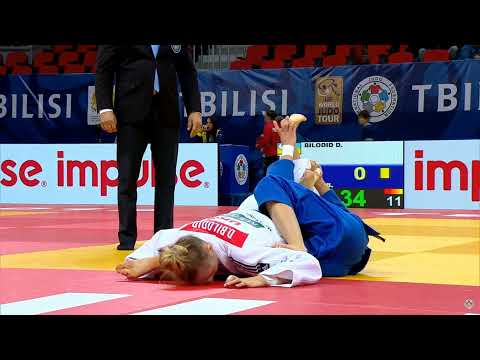
Sankaku-Jime is an advanced and highly effective strangle where tori creates a triangular lock with their legs around uke's head and one arm, squeezing the carotid arteries with the combined force of the thigh and the opponent's own arm. Known internationally as the "triangle choke," it is one of the most powerful and versatile strangling techniques in grappling arts.
Sankaku-Jime — Step by Step
- 1
Control uke's posture and positioning
Establish a position where uke's head and one arm are accessible — typically from guard, a top position, or after a transition.
- 2
Trap one arm and exclude the other
Pull one of uke's arms across their centerline. One arm should be inside the triangle; the other outside. Having both inside or both outside negates the choke.
- 3
Place the leg over uke's neck
Swing one leg over the back of uke's neck. The calf or back of the knee should rest against the back of uke's neck.
- 4
Lock the triangle — hook the ankle
Bend the other leg and hook it under the first leg's knee. The legs lock in a triangular shape around uke's head and trapped arm.
- 5
Squeeze and adjust angle
Squeeze the legs together like scissors. Cut your body at 90 degrees to uke's body for the most effective angle. Pull uke's head down to tighten the triangle.
What Makes It Work
- One arm in, one arm out — this is the fundamental setup requirement. Both arms inside or both outside completely negates the choke.
- The angle of attack matters — positioning your body perpendicular to uke (cutting the angle) significantly amplifies the squeeze.
- The trapped arm's shoulder adds to the pressure on the carotid. The more it presses into the neck, the tighter the choke.
- Sankaku-Jime can be applied from many positions — guard, top, mount, from behind — making it extremely versatile.
What to Avoid
Both arms inside — choke is negated
Ensure only one arm is inside the triangle. The inside arm presses on the carotid; if both are inside there is no compression.
No angle cut — facing directly up or down
Cut your body to 90 degrees relative to uke. Facing straight up or down reduces the squeeze effectiveness dramatically.
Triangle not locked — legs open
Ensure the ankle is properly hooked behind the opposite knee. An unlocked triangle loses pressure and is easier to escape.
Pulling the head up instead of down
Pull uke's head down into the triangle. Pulling upward loosens the choke; pulling down tightens it.
Best Moments to Apply Sankaku-Jime
Sankaku-Jime is applicable from a wide variety of positions and is one of the most versatile submissions in judo. It is set up from guard, arm attacks, scrambles, and transitions. Advanced practitioners create sankaku entries from standing — the sankaku-style leg lock trap (Sankaku-Garami) also exists. Mastery requires extensive drilling of the setup and angle-cutting.
Variations of Sankaku-Jime
Combination Sequences
Attack these first