Quick Facts
- Category
- Katame-Waza
- Subcategory
- Shime-Waza
- Difficulty
- Intermediate
- Belt Level
- 3rd kyu, 2nd kyu
Okuri-Eri-Jime is the most frequently applied choke in elite judo competition. Applied from behind uke, tori slides one forearm across uke's throat while the other arm drives the near collar into the side of uke's neck, creating a blood choke on the carotid arteries. It requires back control, which makes it highly efficient — the position itself is dominant.
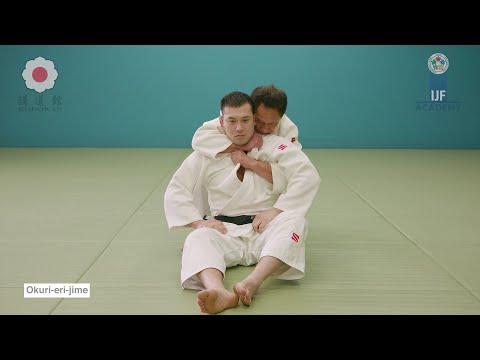
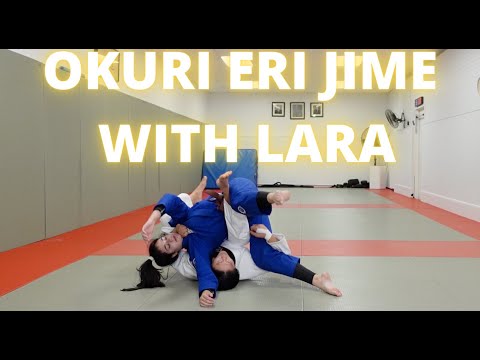
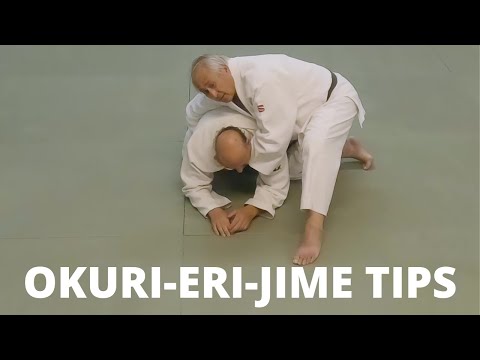
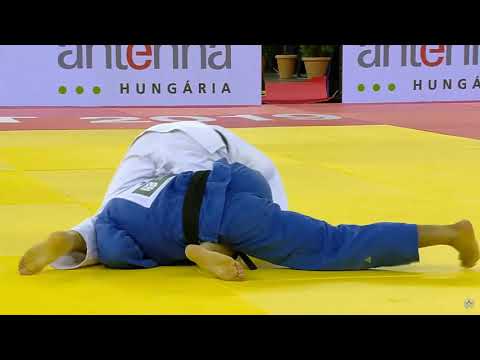
Okuri-Eri-Jime — Step by Step
- 1
Establish back control
Get behind uke with your chest against their back. Hook your legs around uke's hips (body triangle or hooks in).
- 2
Right arm over uke's right shoulder, grip deep into uke's left collar
Reach your right arm over uke's right shoulder. Slide your right hand palm-up deep into uke's left collar. Your four fingers inside the collar, thumb outside. This is the primary choking arm.
- 3
Left hand grips uke's right (near) collar
Your left hand grips uke's right collar near the neck. This arm will drive the collar into uke's left carotid.
- 4
Draw the right arm across the throat
Pull your right arm across uke's throat so the wrist/radial bone area presses against uke's right carotid. The right arm is now the cross-throat arm.
- 5
Squeeze both arms and arch back
Pull your right arm toward you while driving your left hand away, pressing uke's right collar into their left carotid. Lean back to arch and tighten. Both carotids are compressed simultaneously.
What Makes It Work
- Carotid compression on both sides simultaneously is the mechanism — this is a blood choke, not an air choke.
- Back control is the prerequisite. You cannot apply this from in front of uke.
- The left forearm (the crossing arm) should contact with the wrist/radial bone edge for maximum pressure on the carotid.
- Extending your back (arching away from uke) increases the tightening force significantly.
What to Avoid
Applying pressure to the throat (windpipe) instead of the carotids
This is a blood choke, not an air choke. Target the sides of the neck. Pressing on the windpipe is ineffective and unnecessarily uncomfortable.
Not getting deep enough with the first hand into the collar
The deeper the first hand is in the collar, the more of the forearm contacts the neck.
Not leaning back to tighten
Arching away from uke stretches the collar tight and increases pressure dramatically.
Best Moments to Apply Okuri-Eri-Jime
Okuri-Eri-Jime is the primary weapon from back control in judo ne-waza. Any time you can establish back control — after a throw, during scrambles, or when uke is turtled — Okuri-Eri-Jime is the first-choice submission.