
Quick Facts
- Category
- Nage-Waza
- Subcategory
- Yoko-Sutemi-Waza
- Difficulty
- Intermediate
- Belt Level
- 3rd kyu, 2nd kyu
O-Soto-Makikomi is a variation of Osoto-Gari where tori wraps (maki) uke's arm and falls to the side during the outer reap, creating a wraparound sacrifice. The wrapping of uke's arm and the simultaneous side fall combine the reaping action of Osoto-Gari with the sacrifice mechanics of yoko-sutemi-waza, creating a powerful, difficult-to-escape throw.
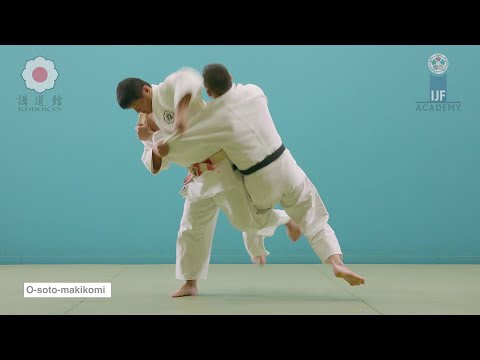
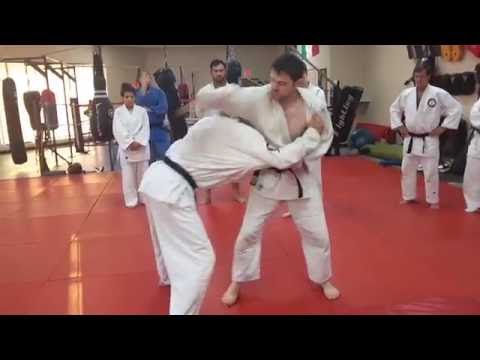
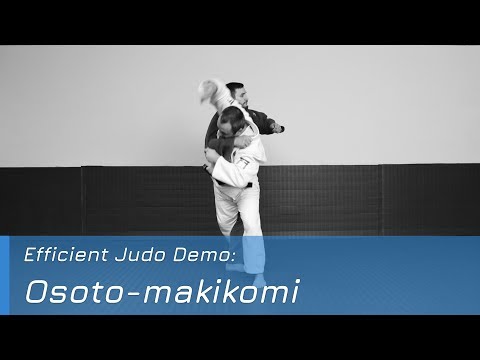
O-Soto-Makikomi — Step by Step
Create backward kuzushi — push uke onto their rear heel with the lapel grip while the sleeve is wrapped. Uke's weight shifts backward, setting up the outer reap. The wrapped arm adds additional control over uke's upper body during the throw.
Step in to uke's right side as for Osoto-Gari. Simultaneously, trap uke's right arm by wrapping your left arm around it (makikomi — winding in). Your chest presses against uke's chest and you are close enough to initiate both the reap and the side fall.
Execute the outer reap while simultaneously falling to the side — the sacrifice element. The wrapped arm traps uke and prevents them from posting or blocking with that arm. The combination of the reap and the side fall drives uke powerfully to the mat.
- 1
Create backward kuzushi
Push uke backward onto their right rear heel. Weight loads backward.
- 2
Step in and wrap the arm
Step in to uke's right side. Simultaneously trap uke's right arm by wrapping your left arm around it — pulling it tight against your chest.
- 3
Position for the reap
Load your reaping leg back and position your body close to uke for the Osoto-style outer reap.
- 4
Reap and fall simultaneously
Execute the outer reap of the back of uke's right thigh while falling to the side — the sacrifice. Both actions happen together.
- 5
Drive uke to the mat
The combination of reap and side fall drives uke powerfully to the mat. The wrapped arm prevents uke from defending with that arm.
What Makes It Work
- The arm wrap (makikomi) is what distinguishes this from standard Osoto-Gari. The wrap traps uke's arm and adds sacrifice mechanics.
- The reap and the side fall must be simultaneous. Reaping first then falling, or falling first then reaping, reduces power.
- The arm wrap must be tight — uke's arm trapped against tori's chest. A loose wrap can slip and uke regains arm control.
- Makikomi throws are powerful and carry some risk to uke's shoulder — practice with care and ensure uke has good ukemi.
What to Avoid
Wrapping loosely — arm slips free
Pull uke's arm firmly against your chest as you wrap. The arm should be fully controlled throughout.
Reaping without falling — standard Osoto-Gari
The sacrifice element must be present. Fall to the side during the reap to activate the makikomi mechanics.
Falling before the reap connects
The reap and fall are simultaneous. Falling without the reap creating contact means you land beside uke rather than taking them with you.
Insufficient backward kuzushi
Like Osoto-Gari, O-Soto-Makikomi requires uke's weight to be backward before the reap. Without kuzushi, uke counters easily.
Best Moments to Apply O-Soto-Makikomi
O-Soto-Makikomi is used when Osoto-Gari has been partially entered but uke is resisting the reap. Adding the arm wrap and falling creates a more committed throw that is harder to counter. It is also used when tori wants to ensure uke cannot post with the arm being wrapped.