Quick Facts
- Category
- Katame-Waza
- Subcategory
- Osaekomi-Waza
- Difficulty
- Beginner
- Belt Level
- 6th kyu, 5th kyu, 4th kyu
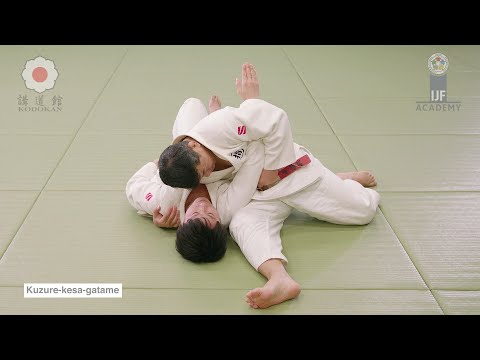
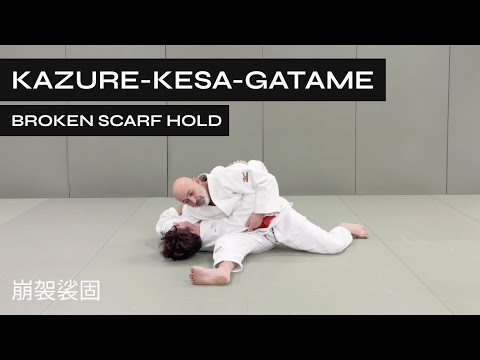
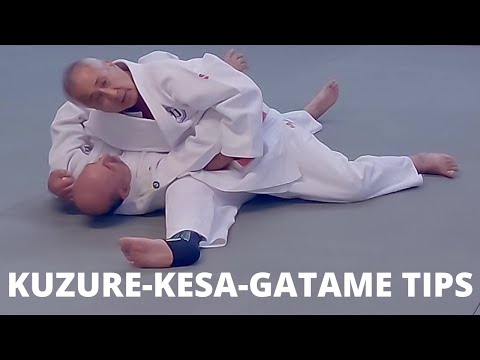
Kuzure-Kesa-Gatame is a variation of Kesa-Gatame (Scarf Hold) in which the arm position is modified — instead of wrapping uke's arm under tori's armpit, tori places their arm around uke's head or neck. This "broken" (kuzure) variation is often more comfortable for tori and more difficult for uke to escape. The hold remains at uke's side, with tori's body weight low and to the side, but the changed arm position provides different control and transition options.
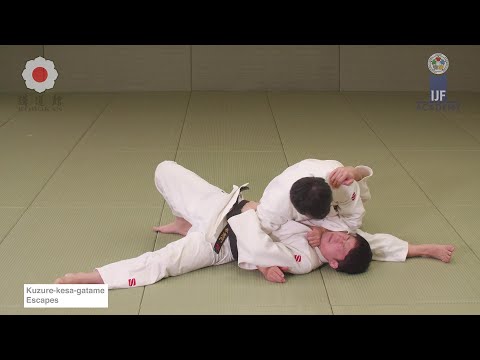
Kuzure-Kesa-Gatame — Step by Step
Control uke's upper body by pressing your body weight toward their head-side. Use your arm around uke's neck/head to prevent them from turning toward you, and your grips to prevent them from bridging effectively.
From uke's right side, sit low with your hips close to the ground. Place your right arm under uke's neck and around the back of their head (rather than trapping their arm as in standard Kesa-Gatame). Grip uke's collar or the mat beside their head. Your left arm controls uke's right arm — grip the sleeve or wrist, trapping it against your body.
Apply pressure with your body weight by leaning toward uke's upper body. Spread your legs wide for a stable base — your right leg extends away from uke and your left leg bends forward. Keep your hips low and your head down. The hold is maintained by weight distribution, not muscle strength alone.
- 1
Approach and establish side position
Move to uke's right side, positioning your hips close to their armpit region. Sit low with legs spread for a stable base.
- 2
Wrap the arm around uke's neck
Slide your right arm under uke's neck and around the back of their head. This is the "broken" variation — around the neck, not trapping the arm.
- 3
Control uke's near arm
Grip uke's right sleeve or wrist with your left hand, pulling their arm against your torso and controlling it.
- 4
Establish the base
Extend your right leg backward and bend your left leg forward, keeping your hips close to the ground. This wide base resists uke's bridge and roll.
- 5
Apply and maintain the hold
Lean your body weight toward uke's upper chest. Keep your head low and pressed toward uke. Hold for 10 seconds for waza-ari, 20 seconds for ippon.
What Makes It Work
- Body weight does the pinning — lean into uke rather than trying to hold with arm strength.
- The base (spread legs, low hips) is what resists uke's bridge. A high or narrow base can be rolled.
- Keep the neck arm pressed down — lifting your head lifts your weight and loosens the hold.
- The "broken" arm position (around neck instead of trapping arm) offers different transition options to other holds and submissions.
What to Avoid
Sitting too high (hips raised)
Hips must be close to the mat. High hips create a lever point that uke can use to bridge and roll you.
Holding with arms instead of body weight
Relax your arms and let body weight do the work. Muscle-holding fatigues quickly; weight distribution is sustainable.
Narrow leg base
Widen your leg stance significantly. A narrow base is easily upset by uke's bridging attempts.
Losing control of uke's near arm
The near arm (controlled by your left hand) is uke's primary escape tool. Maintain firm control of it against your body.
Best Moments to Apply Kuzure-Kesa-Gatame
Kuzure-Kesa-Gatame is ideal immediately after a throw when uke lands on their side — the natural follow-through from a side-falling throw. It is also a good transition from Kesa-Gatame when uke begins to extract their arm from under your armpit. The neck wrap allows easy transitions to choke attacks.