Kuzure-Kami-Shiho-Gatame
崩上四方固
"Modified Upper Four-Corner Hold"
Quick Facts
- Category
- Katame-Waza
- Subcategory
- Osaekomi-Waza
- Difficulty
- Beginner
- Belt Level
- 5th kyu, 4th kyu
Kuzure-Kami-Shiho-Gatame is a modified (kuzure) version of Kami-Shiho-Gatame where tori controls uke from above but changes one or both arm grips to create a broken or varied version of the standard upper four-corner hold. Typically tori releases one or both belt grips in favor of trapping one of uke's arms — this variation allows more control over uke's arm and improves the hold against certain escapes.
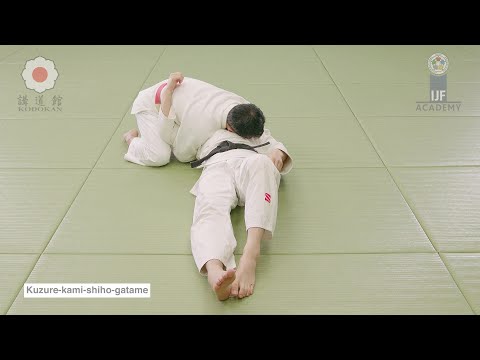
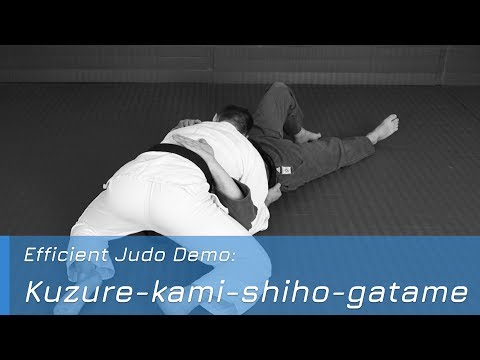
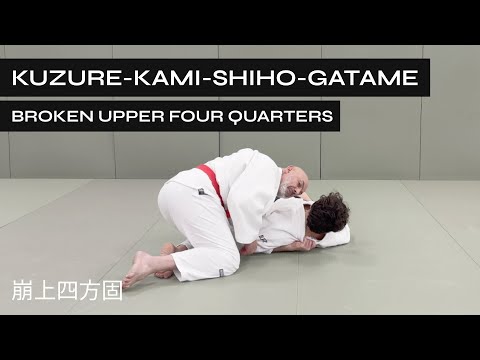
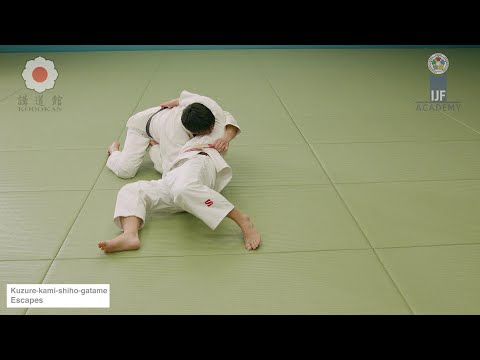
Kuzure-Kami-Shiho-Gatame — Step by Step
- 1
Position above uke's head facing their feet
Lie or position over uke's head, facing their feet — same as Kami-Shiho-Gatame.
- 2
Trap one arm instead of gripping both sides of the belt
Rather than gripping both sides of uke's belt, trap one of uke's arms by wrapping your arm around it. This is the "kuzure" modification.
- 3
Use free arm to grip belt or collar
With the free arm, grip uke's belt or collar on the other side. This maintains control on both sides but with different grip types.
- 4
Apply chest pressure to uke's chest
Drive your chest weight downward onto uke's chest or sternum. The weight on the chest is the primary holding force.
- 5
Spread legs and flatten the body
Spread both legs and flatten your body to lower your center of gravity. Wide legs resist bridging escapes.
What Makes It Work
- The "kuzure" modification — typically an arm trap — provides better control of one of uke's arms compared to standard Kami-Shiho-Gatame.
- Chest pressure on uke's chest is the holding force. Drive your weight downward.
- The arm trap immobilizes one of uke's escape tools. The remaining arm is controlled by the other grip.
- Kuzure variations allow adaptation when uke's arm position makes the standard belt grip difficult to maintain.
What to Avoid
Chest too high — sitting up rather than pressing down
Drive your chest weight down onto uke. A high chest means your weight is in your arms, not pressing uke.
Arm trap too loose
The trapped arm should be firmly secured — wrap it in or use your knee to pin it. A loose trap allows escape.
Legs too close together — vulnerable to bridge
Spread your legs to both sides. A wide base resists uke's bridging attempts.
Head position too high
Keep your head low and pressed to uke's body. A high head raises your center of gravity and gives uke leverage to roll you.
Best Moments to Apply Kuzure-Kami-Shiho-Gatame
Kuzure-Kami-Shiho-Gatame is the natural hold after a seoi-nage or other forward shoulder throw where tori ends up above uke's head. The arm trap modification makes it more effective when uke actively works to free their arms. Use when one of uke's arms is accessible for trapping.