Quick Facts
- Category
- Nage-Waza
- Subcategory
- Te-Waza
- Difficulty
- Beginner
- Belt Level
- 5th kyu, 4th kyu
Kuchiki-Taoshi is a single-leg takedown in which tori grabs uke's near leg from the outside and drives uke backward to the mat. The name literally means "rotting tree topple," evoking the image of a tree losing its base and falling. It is one of the most instinctively recognizable throws in judo and translates directly into wrestling and MMA leg-attack techniques. Classified among the Shinmeisho no Waza (newly accepted techniques), it is accessible to beginners due to its mechanical simplicity. IMPORTANT: Under current IJF rules (since 2010), initiating Kuchiki-Taoshi as a direct standing leg grab from the standard grip position is prohibited in IJF competition. The technique remains fully valid in randori, club practice, and non-IJF competition formats.
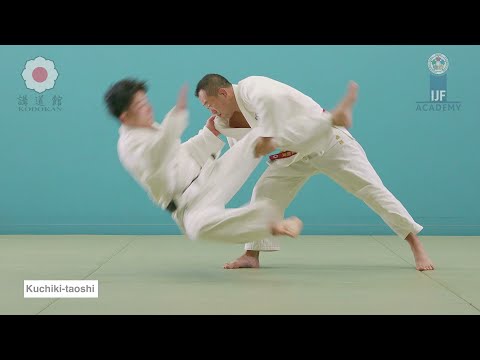
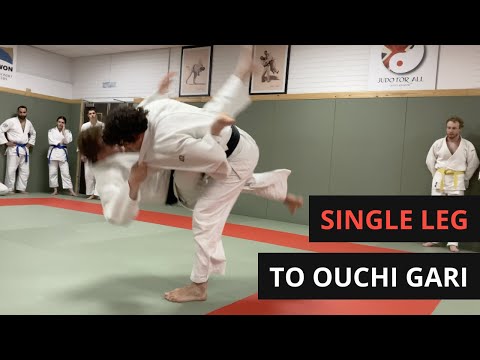
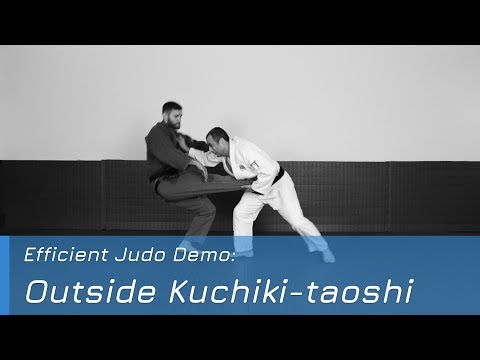
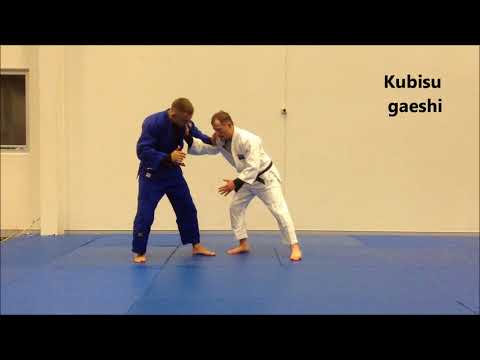
Kuchiki-Taoshi — Step by Step
Push uke backward with your chest and both arms as you shoot in for the leg — the forward drive of your body weight into uke's torso creates the backward off-balance. The grip on the leg simultaneously removes uke's ability to step back and recover. The combined effect is a clean backward kuzushi.
Shoot your lead foot forward between uke's legs or to the outside of their near leg. Bend your knees to lower your level as you penetrate. Your chest presses into uke's hip or lower abdomen. Your grabbing arm hooks the outside of uke's near knee or thigh, lifting or scooping the leg toward you.
Drive forward and upward through uke's centre while scooping the grabbed leg up and toward you. Lean your bodyweight into uke's chest, forcing them to arch backward. Guide uke down to the mat — onto their back — as the base leg is pulled forward and their upper body is driven backward simultaneously.
- 1
Close the distance with a forward drive
Step forward aggressively to close the space between you and uke. Lower your level by bending at the knees, not the waist, to bring your center of gravity below uke's hips.
- 2
Reach and grip the outside of uke's near knee
Reach down with your arm to grip the outside of uke's near leg at the knee or just above it. The grip is from the outside, curling under the knee to scoop upward.
- 3
Press your chest into uke's hip or lower torso
Drive your chest and shoulder into uke's hip or lower abdomen as you grip the leg. This creates the backward-loading pressure that prevents uke from posting or stepping away.
- 4
Scoop the leg upward and toward you
Pull the gripped leg up and toward your body, removing uke's ground contact on that side. Your arm scoops rather than pulls straight back — the upward component lifts uke off balance.
- 5
Drive forward to topple uke backward
Continue driving forward through uke's center while the gripped leg is held up. Uke's upper body falls backward as their base is eliminated. Guide them to the mat in a controlled backward fall.
What Makes It Work
- Level change is critical — lower your hips by bending the knees before reaching for the leg. Reaching down with a straight back is easily sprawled on.
- Drive forward through uke's center simultaneously with the leg grab — the chest pressure into the torso is what causes the topple, not arm strength alone.
- Grip the outside of the knee, not the ankle — the knee provides more mechanical leverage and a more reliable scoop angle.
- The technique works because you eliminate one base leg while pushing the upper body in the opposite direction — a classic lever-and-base takedown.
- Speed of penetration matters more than raw strength. A fast, committed level change is harder to sprawl than a slow, tentative one.
What to Avoid
Bending at the waist instead of the knees to reach the leg
Lower your hips by squatting, not folding forward. Bending at the waist raises your center of gravity and puts your head down in a vulnerable position.
Grabbing the ankle instead of the knee
Grip at the knee or lower thigh for better leverage. Ankle grabs allow uke to step over or around your arm more easily.
Pulling the leg without driving the chest into uke
The chest drive into uke's torso is as important as the leg grab. Without it, uke simply hops backward on the remaining leg.
Failing to complete the finish — leaving uke standing on one leg
Continue driving forward until uke is on the mat. A partially complete Kuchiki-Taoshi leaves you in a compromised position reaching low while uke is mobile.
Best Moments to Apply Kuchiki-Taoshi
Kuchiki-Taoshi is most effective when uke is upright and advancing, or when they shift weight to the near leg — for example, planting a foot to resist your pull. It can also be used as a low-level option when uke drops into a strong defensive crouch and presents their legs. In competition, it pairs well with grip-fighting sequences that draw uke's attention upward before a low leg attack.