Quick Facts
- Category
- Katame-Waza
- Subcategory
- Osaekomi-Waza
- Difficulty
- Beginner
- Belt Level
- 6th kyu, 5th kyu
Kesa-Gatame is the foundational hold-down of judo and typically the first osaekomi-waza taught to beginners. Tori sits beside uke, trapping uke's arm under their armpit and wrapping the other arm around uke's neck, controlling them with body weight and leg positioning. It teaches the core principles of ground control: posture, weight distribution, and responding to uke's escapes.
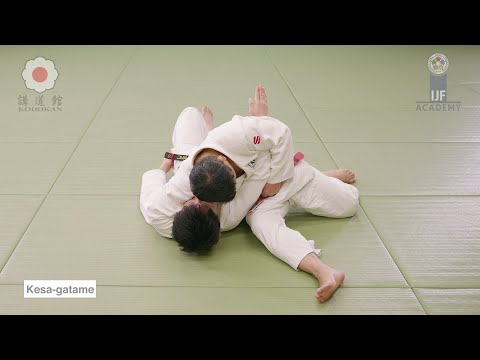
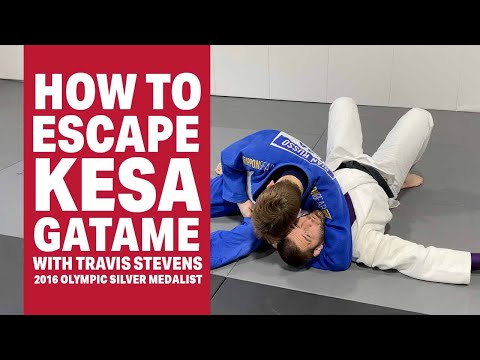
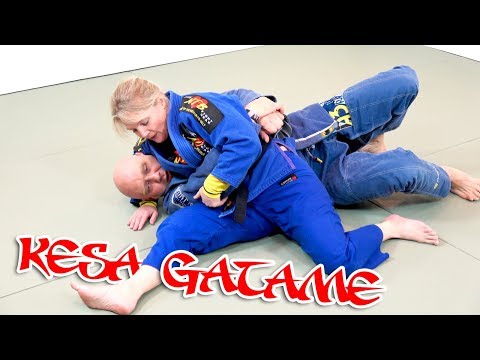
Kesa-Gatame — Step by Step
- 1
Sit beside uke at their right shoulder, facing the same direction as their head
Position yourself at uke's upper right side. Your right hip is adjacent to uke's right shoulder. Face toward uke's feet.
- 2
Trap uke's right arm under your left armpit
Wrap your left arm around and under uke's right arm, trapping it tightly in your armpit. Hold their arm close to your body — do not allow any space for them to pull it free.
- 3
Wrap your right arm around uke's neck
Slide your right arm under uke's neck and grip uke's right collar near the base of their neck, or wrap around to grip behind their head. Your forearm rests against the side of their head.
- 4
Drive your weight onto uke's chest
Lower your center of gravity onto uke's chest by leaning into them. Distribute your body weight — the heavier and lower you are, the more effective the hold.
- 5
Position your legs for stability and countering escapes
Spread your legs wide for a low, stable base. Your right leg extends away from uke for balance. As uke attempts to escape, adjust your leg position to maintain control.
What Makes It Work
- Body weight is the primary holding mechanism — your weight presses uke's shoulder and chest to the mat.
- The trapped arm must be held tight in your armpit with no space — any gap and uke can work it free.
- Low center of gravity: spread your legs and lower your hips. A high, kneeling position is easily rolled.
- Stay connected to uke at all times. If they move, you move with them, not against them.
What to Avoid
Sitting too upright — high center of gravity
Lean your body weight forward and down onto uke. The lower and heavier you feel to uke, the harder to escape.
Allowing space under the trapped arm
Clamp uke's arm in your armpit with your entire arm and shoulder. Any gap gives them leverage to escape.
Legs too close together — unstable base
Spread your legs wide. Wide legs lower your center of gravity and resist uke's rolling escapes.
Pulling up on the arm trap (arms too tense)
Relax your arms and let body weight do the holding. Pulling up with arms raises your center of gravity.
Best Moments to Apply Kesa-Gatame
Kesa-Gatame is the natural hold-down transition from throws that project uke to your side — Osoto-Gari, Ko-Soto-Gari, or any throw where tori lands beside uke. After Seoi-Nage, Yoko-Shiho-Gatame or mount is typically more accessible. It is the beginner's introduction to ne-waza control and teaches essential body weight mechanics.