Quick Facts
- Category
- Nage-Waza
- Subcategory
- Koshi-Waza
- Difficulty
- Intermediate
- Belt Level
- 4th kyu, 3rd kyu
Harai-Goshi is a powerful hip throw that adds a sweeping leg action to the classic hip entry. After turning in to place the hip, tori sweeps their right leg backward into uke's legs, amplifying the throwing force with leg sweep mechanics. It is one of the most effective throws in competition judo.
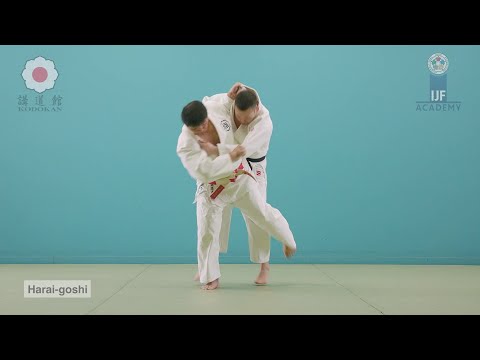
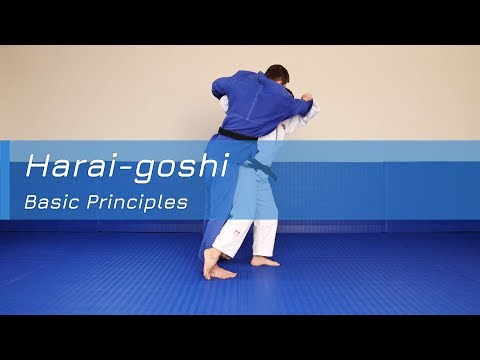
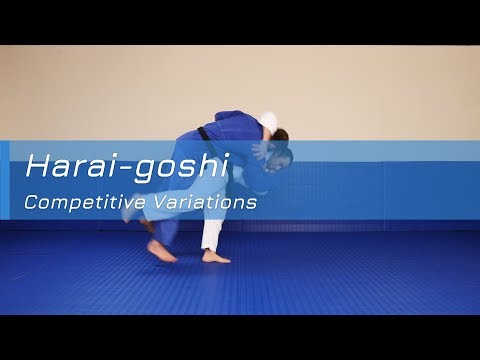
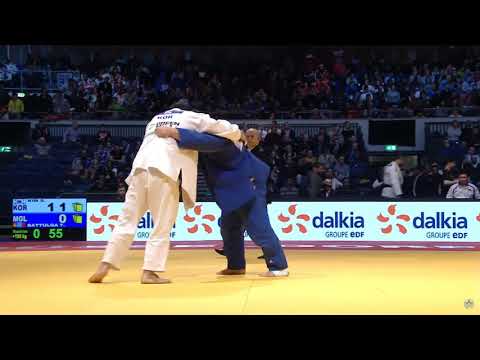
Harai-Goshi — Step by Step
Pull uke forward and upward onto their right front corner. Your sleeve hand elevates uke's arm while your lapel hand pulls them forward. The goal is full forward kuzushi — uke leaning forward with weight on the balls of their feet.
Step your right foot in front of uke's right foot and pivot so your back faces uke's chest. Your lapel arm stays high, pulling uke onto your hip. Bend your knees to lower your hips below uke's hip level.
Straighten your right leg and sweep it backward and then upward into uke's right thigh, driving the back of your thigh through uke's leg. Simultaneously pull with both hands and rotate forward at the hip. The upward component of the sweep elevates uke's legs off the ground, sending them over in a powerful arc.
- 1
Drive uke forward onto their toes (kuzushi)
Pull the sleeve arm upward and forward. Your lapel hand pulls forward at chest height. Uke must be loaded forward before entry.
- 2
Step in with your right foot
Step your right foot in front of uke's right foot, toes pointed forward. This is your anchor point for the pivot.
- 3
Pivot to back-facing position
Rotate on your right foot, sweeping your left foot around until your back faces uke's chest. Bend your knees to lower your hips. Your right hip presses against uke's lower abdomen — positioned slightly above their hip line to act as the throwing rail, not just a fulcrum.
- 4
Initiate the leg sweep
Swing your right leg backward and into uke's right thigh or the back of their leg. The sweep begins as you start rotating forward.
- 5
Complete the throw with rotation and sweep
Pull both hands downward and forward. Straighten your standing leg. The combination of rotation, arm pull, and leg sweep projects uke powerfully over your right hip.
What Makes It Work
- The leg sweep amplifies hip throw mechanics — the sweep is not a trip, it sweeps uke's legs away while you project them forward.
- Contact the back of uke's thigh with the back of your thigh — mid-thigh contact maximizes lever effect.
- Strong kuzushi is essential. Harai-Goshi against an upright uke often results in a blocked entry.
- Keep the lapel arm high and pulling forward throughout. Dropping this arm kills the throw.
What to Avoid
Sweeping too early (before the hip is loaded)
Establish hip contact first, then sweep. Sweeping prematurely misses uke's leg and you lose your base.
Sweeping at the ankle instead of the thigh
Contact should be thigh-to-thigh. Sweeping at the ankle loses leverage and is easily defended.
Dropping the lapel arm during kake
The lapel arm must pull forward throughout. If it drops, uke's upper body stays upright and the throw dies.
Standing too upright — hips not below uke
Bend your knees on entry. If your hip is the same height as uke's, you cannot lever them over.
Best Moments to Apply Harai-Goshi
Harai-Goshi is particularly effective when uke has a defensive posture that blocks hip entry — the sweeping leg bypasses their defensive leg placement. Works well after combinations from O-Uchi-Gari or Ko-Uchi-Gari. Most effective against same-height or slightly shorter opponents, or when uke is bent forward enough that hip entry is accessible regardless of height.